

Introduction
The Streamlight TLR-1 is an old light, but has managed to stay relevant despite high-velocity competition. Streamlight has recently released a new version of the light, so today we’ll test it and see how it performs.

Background
The TLR-1 has had many versions over its nearly two-decade long run. Here’s the landscape:
| Light | Release Date | Lumens | Candela | Image |
| TLR-1 | 2006 | 300 | 12,000 | 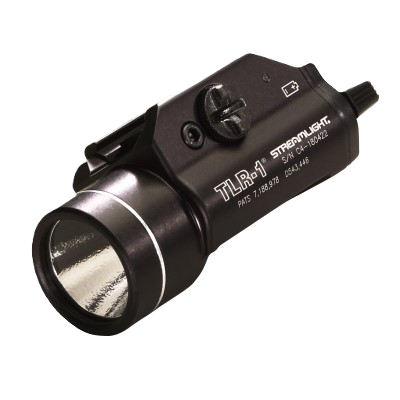 |
| TLR-1S | 2010 | 300 | 12,000 | 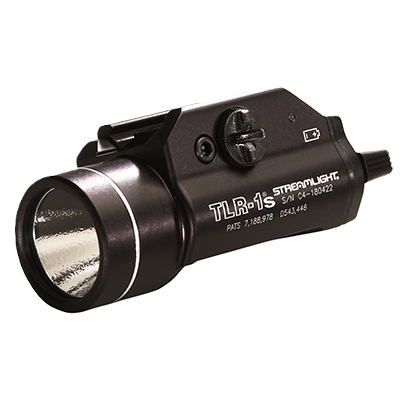 |
| TLR-1 HL | 2013 | 1,000 | 20,000 | 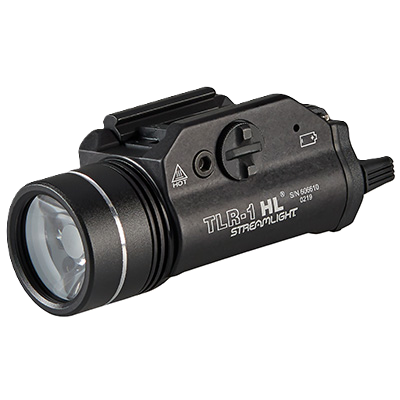 |
| TLR-1 HP | 2025 | 1,000 | 65,000 | 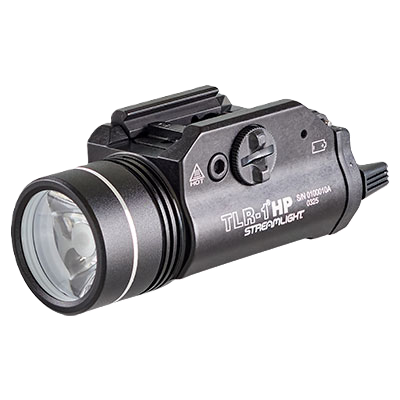 |
As you can see, its output has steadily increased while its footprint has remained identical. Because of this, holsters are ubiquitous and well-fit.
The TLR-1 HP was released around the same time as the HL-X and HP-X, which seem to be the “next gen” of this light, with some upgrades to make it more modern and convenient to use. Interestingly, when using CR123As, the TLR-1HP has more candela than the more-expensive TLR-1 HP-X.
Overall, this light is another upgrade in a lineup of good lights from Streamlight.
First Impressions
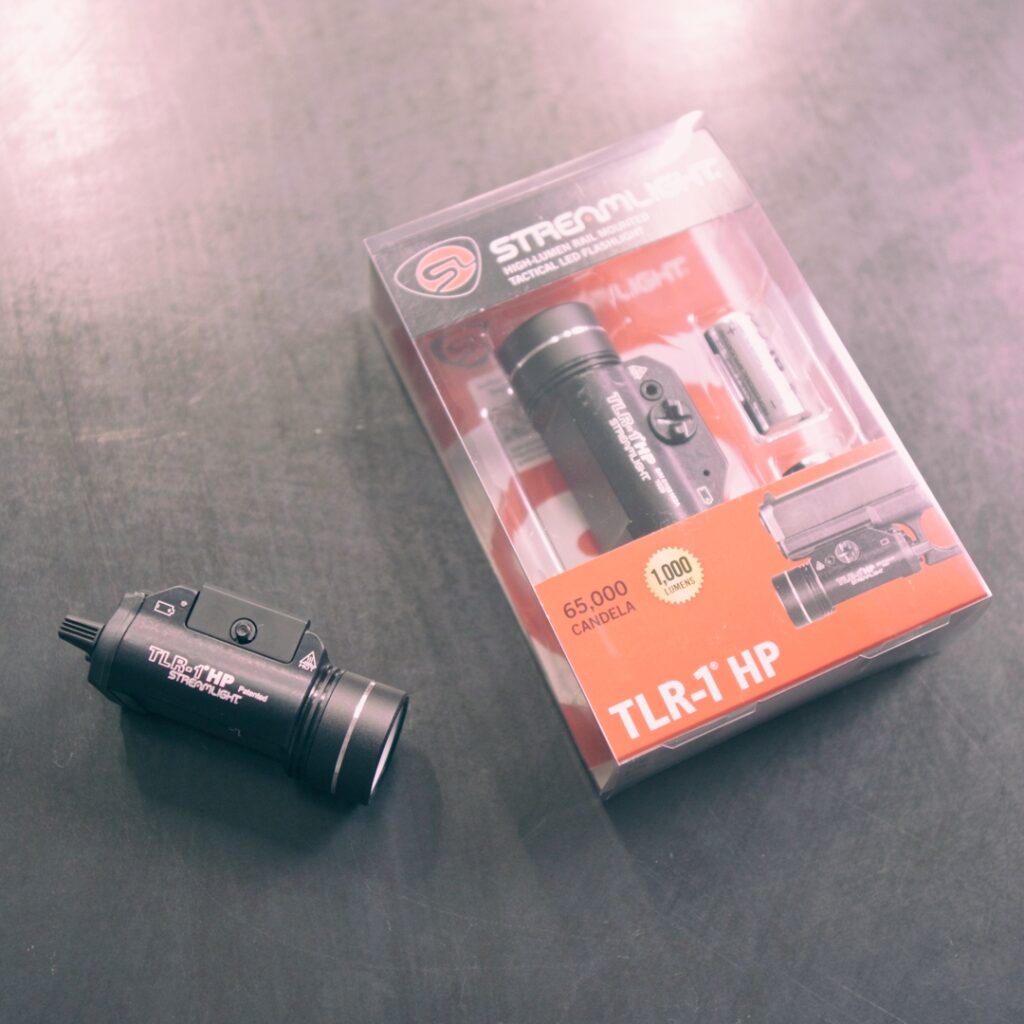
The light is virtually identical to all other previous Streamlight TLR-1 series lights. Their finish has changed over the years, but the operation has remained fundamentally the same. Rotate the switch clockwise for constant-on, and counter-clockwise for momentary. I prefer the switches on the new Streamlight TLR-1 HL-X, but many people have already trained with and become proficient with the original “rocker switches.” If that’s you, this light is a nice upgrade from your old TLR-1 HL.
Manufacturer’s Claims and Specs
Here are the full specifications for the TLR-1 HP:
| Spec | Manufacturer’s Claim |
| Lumens | 1,000 |
| Candela | 65,000 |
| Runtime | 1.75 Hours |
| Battery Type | CR123A |
| Length | 3.39 Inches |
| Width | 1.47 Inches |
Let’s see how it measures up.
Into the Lab: Lumens, Runtime, Candela, Color Temp and CRI
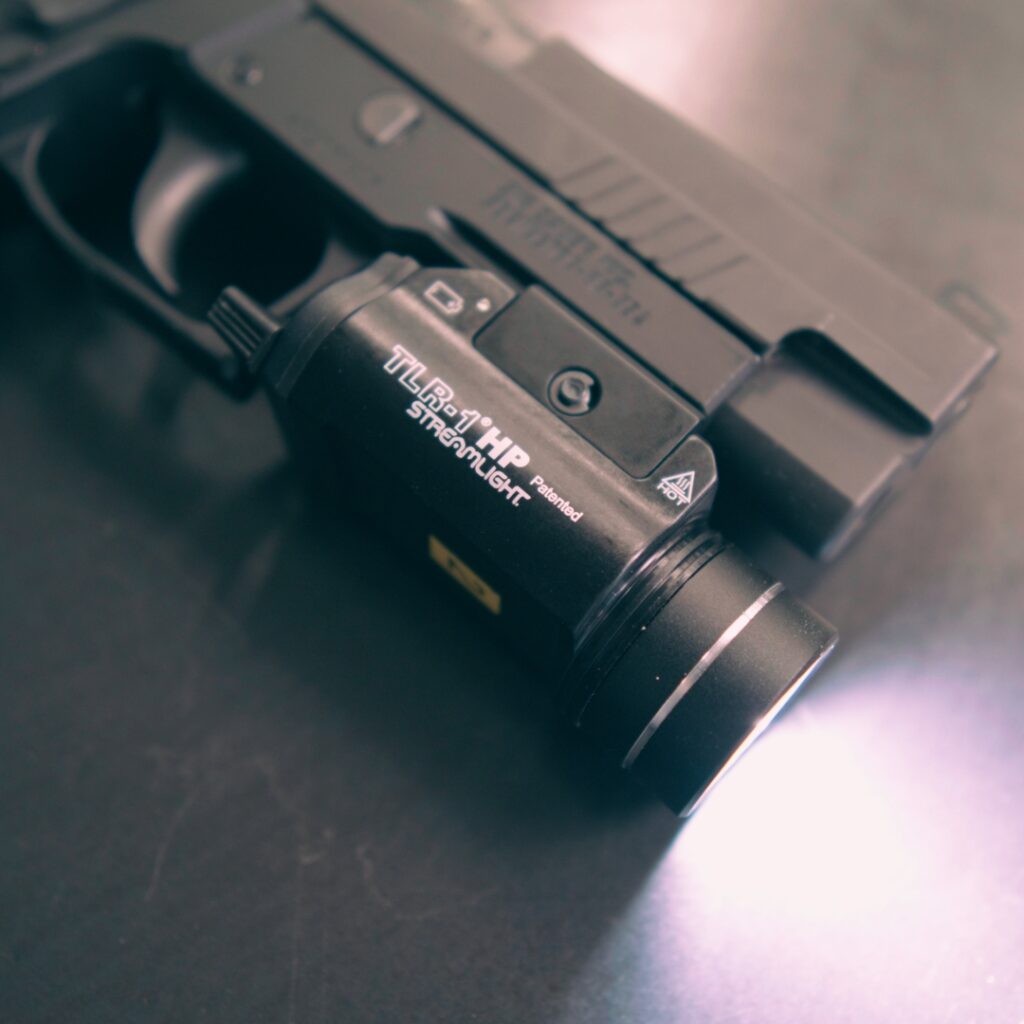
We have two samples of the TLR-1 HP.
Lumens and Runtime
Lumens are a measurement of the raw output of the light, and does not account for how “focused” the beam is. Two lights with 1,000 lumens can have radically different beam profiles and color temperatures.
I loaded fresh Panasonic batteries into each of these lights (since I performed the lumen test after the candela test) and inserted them into my integrating sphere. Here are my results:
Let’s get a closer look at the first ten minutes:
Here are the results:
| Sample | Lumen Output (30s) | Runtime |
| Sample One | 986 | 1:51:19 |
| Sample Two | 1008 | 1:52:04 |
| Claimed | 1,000 | 1:45:00 |
Streamlight has a track record for accurate lumen claims. The actual runtime exceeds the specification, as well, which is nice.
Overall this is a really solid performance from Streamlight.
Candela
Candela is a measurement of the “intensity” of a given output. More candela means the light can travel farther.
Streamlight claims that the TLR-1 HP produces 65,000 candela.
| Sample | Output (0s) | Output (30s) |
| 1 | 57670 | 55860 |
| 2 | 59990 | 59460 |
Not quite 65,000. But very close. Huge upgrade from the TLR-1HL.
In my opinion, this is just the right mix of lumens and candela. I’m going to get into this a bit more in my final thoughts section.
Color Temp and CRI
Color temperature and CRI measure two different aspects of a weapon-mounted light’s output “quality.”
Color temperature describes the tint or hue of the light, expressed in Kelvin (K). Lower Kelvin values produce a warmer, more yellow tone, while higher values create a cooler, bluer tone. For example, candlelight is around 1900K while sunlight is closer to 5000K. Many LEDs float around 5500K-6500K.
CRI (Color Rendering Index), on the other hand, measures how accurately a light source renders colors compared to natural sunlight. Cheap LEDs often have low CRI, which is why they make reds and oranges look dull and skin tones appear washed out or lifeless. CRI is a unitless measurement system, where 0 is the worst score and 100 means the output renders color just as well as sunlight.
Both of these measurements can vary depending on the amount of power supplied to the LED. When an LED first turns on, it typically produces its coolest color temperature because it’s receiving the highest current at that moment.
Here are the measurements from my two samples:
| Color Temperature | CRI |
| 6150K | 70.1 |
| 6091K | 69.2 |
These numbers are pretty standard for modern WMLs. Not spectacular. Don’t expect perfect color rendition when attempting to positively identify your target.
Final Thoughts
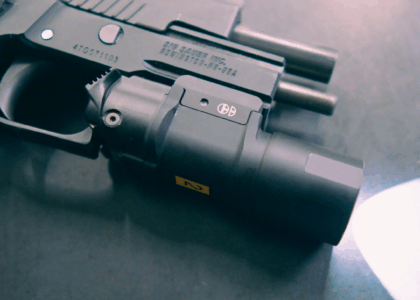
The Streamlight TLR-1HP is quite the sleeper. It looks nearly identical to the previous generations of TLR-1’s, but performs to modern standards.
While the SureFire X-300T makes more candela on paper (SureFire claims 66,000) our in-house measurements across four different samples indicated outputs of anywhere from 55,000 to 67,000. This means, depending on the sample you receive, you could get a TLR-1HP with more candela than the X-300T. Even comparing the worse of our two TLR-1 HP’s to the best of our X-300T’s, the spread is not that wide, and probably not noticeable in person.
What is noticeable, though, is the difference in lumen output. Our dimmest sample of the X-300T produced 703 lumens, and our brightest, 784. The ~300 lumen difference between the X-300T and the TLR-1 HP show up in the “flood” of the beam – the X-300T has fewer lumens to work with, and focuses them into a very tight beam, while the TLR-1HP spills more usable light into the area surrounding the center of the beam. This is useful for navigating your house, but maintains the ability to punch across some property.
Compared to the X-300T, the TLR-1HP is smaller, cheaper, and brighter, with better switches, all while still being made in the States. Streamlight really stole the show with this one.
I prefer the Streamlight HL-X and HP-X to the HP simply because of the improved switches and higher output, plus compatibility with rechargeable batteries and the ability to change batteries without tools. Also, the HP-X is a bit more expensive.
If you’re happy with your older TLR-1, I think the TLR-1 HP is still worth an upgrade. It’s a more intense beam that maintains the strong lumen output of the previous generations of lights.
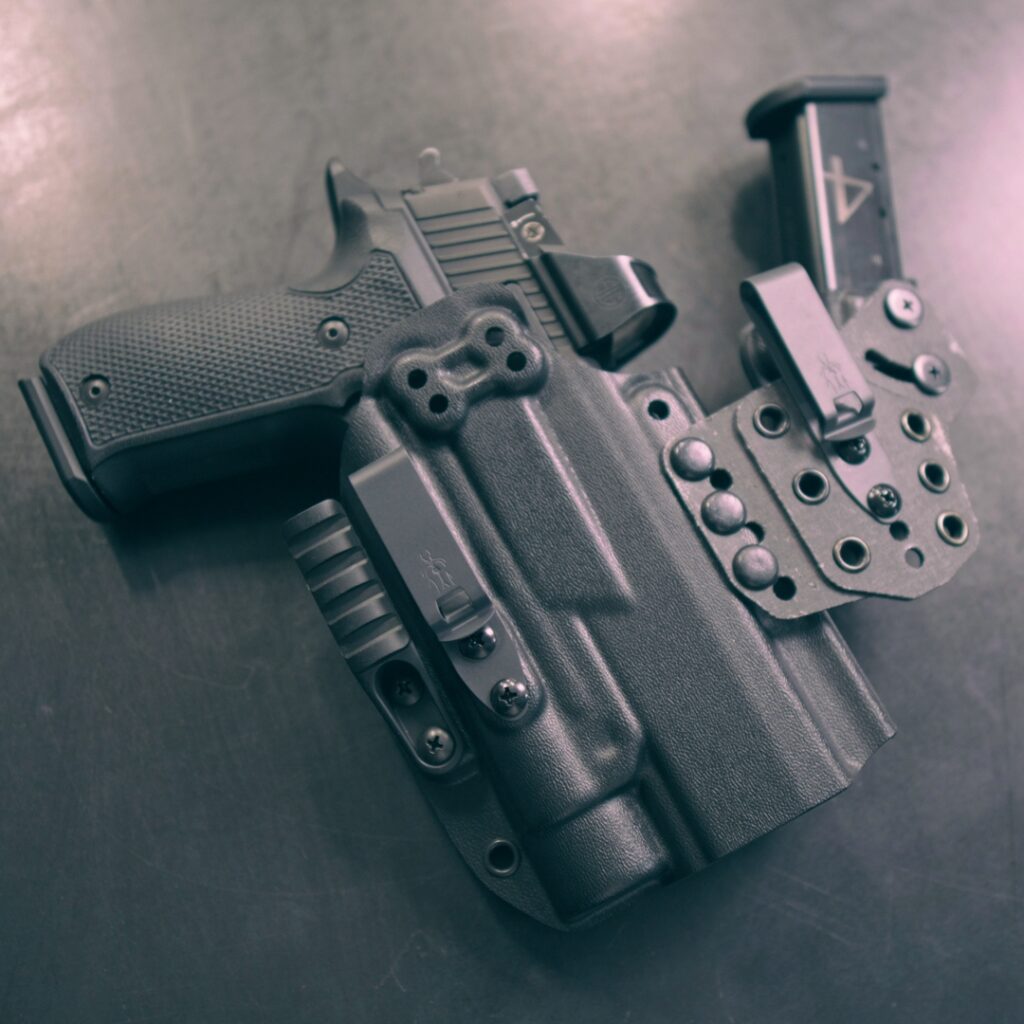
If you’re looking for a holster, I’m running my P226 with a Streamlight TLR-1 HP in our M6 Outlier. This is a multi-fit holster, but if you’re looking for a precision fit holster for something like your Glock, Walther, or M&P., please check our holster finder for more info.
Here’s a quick pro/con table for the TLR-1HP:
| Pros | Cons |
| Holster compatibility Familiar form factor Inexpensive Proven platform | Light must be removed in order to swap batteries Not as cool as the HP-X Larger than some other options like the TLR-7 HL-X |