
Introduction
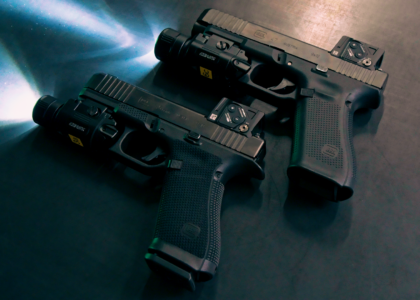
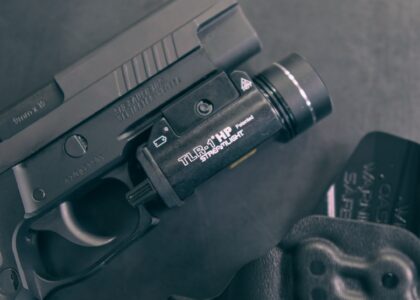
The EPL needs no introduction. After over four years of development, Cloud has finally delivered their pistol light. Let’s see if it lives up to the hype. We pre-ordered three samples for testing.
First Impressions

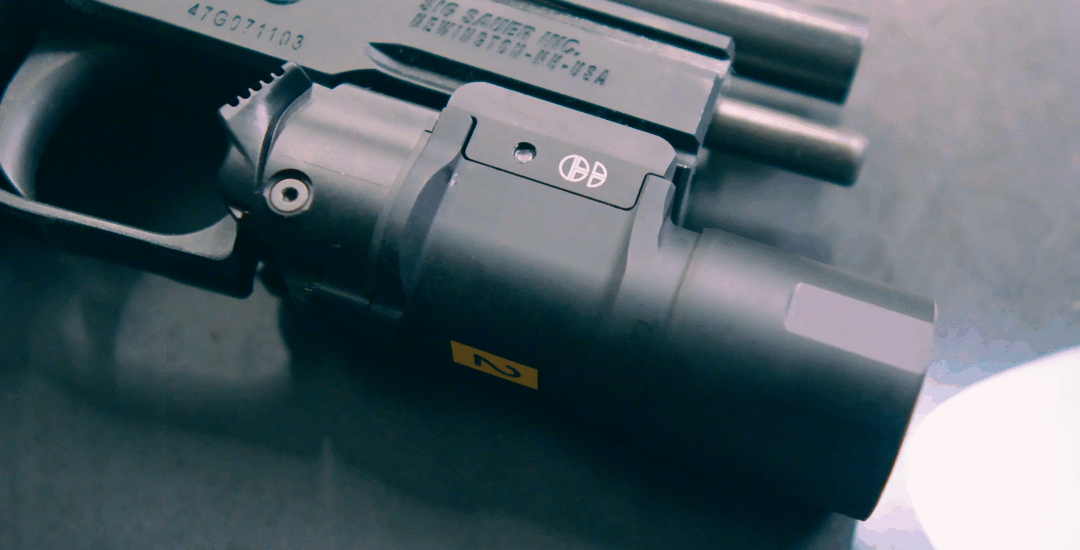
The EPL looks sweet. I like how it tapers front to rear, and the fluted head looks rugged while keeping that signature Cloud look.
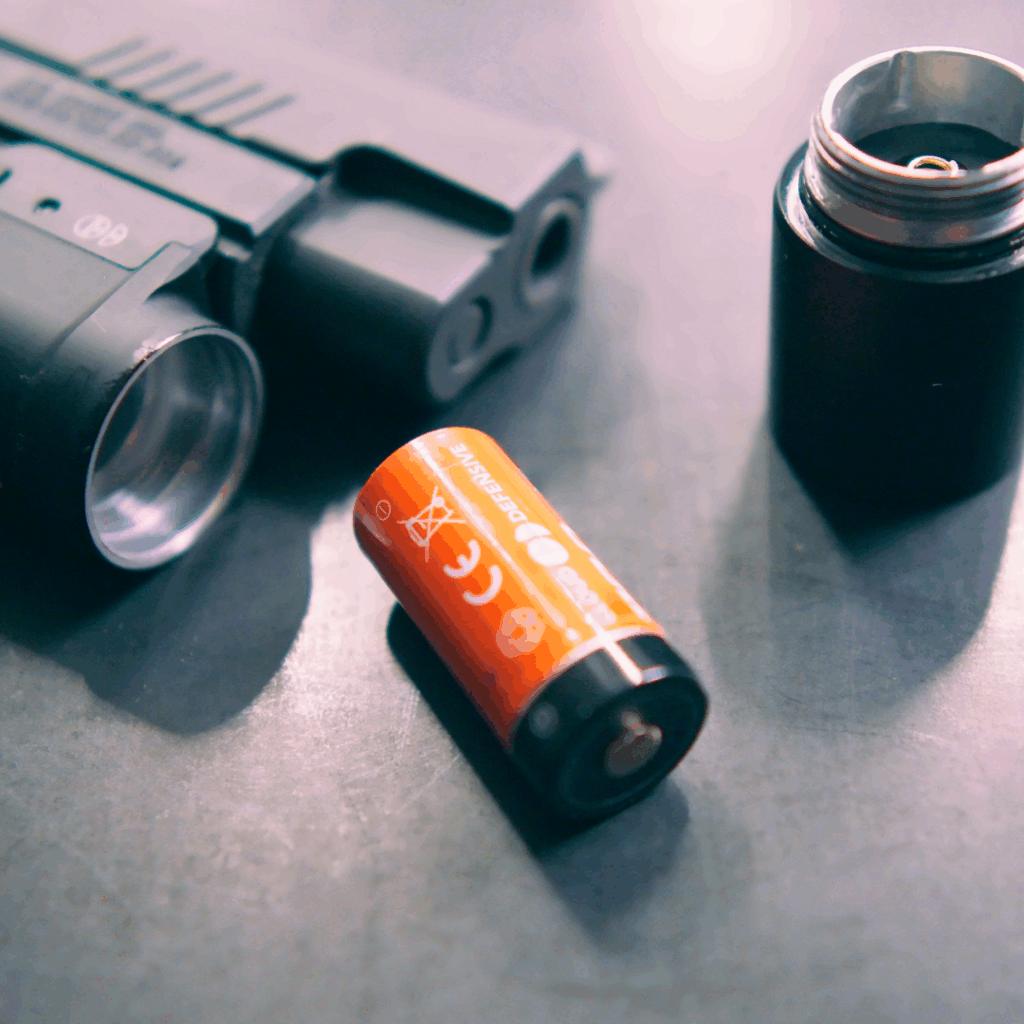
The battery can be removed without detaching the light from the pistol, which is another plus. It uses a USB-C rechargeable 18350, which is common in this segment.
Overall, light appears well-built.
Switches
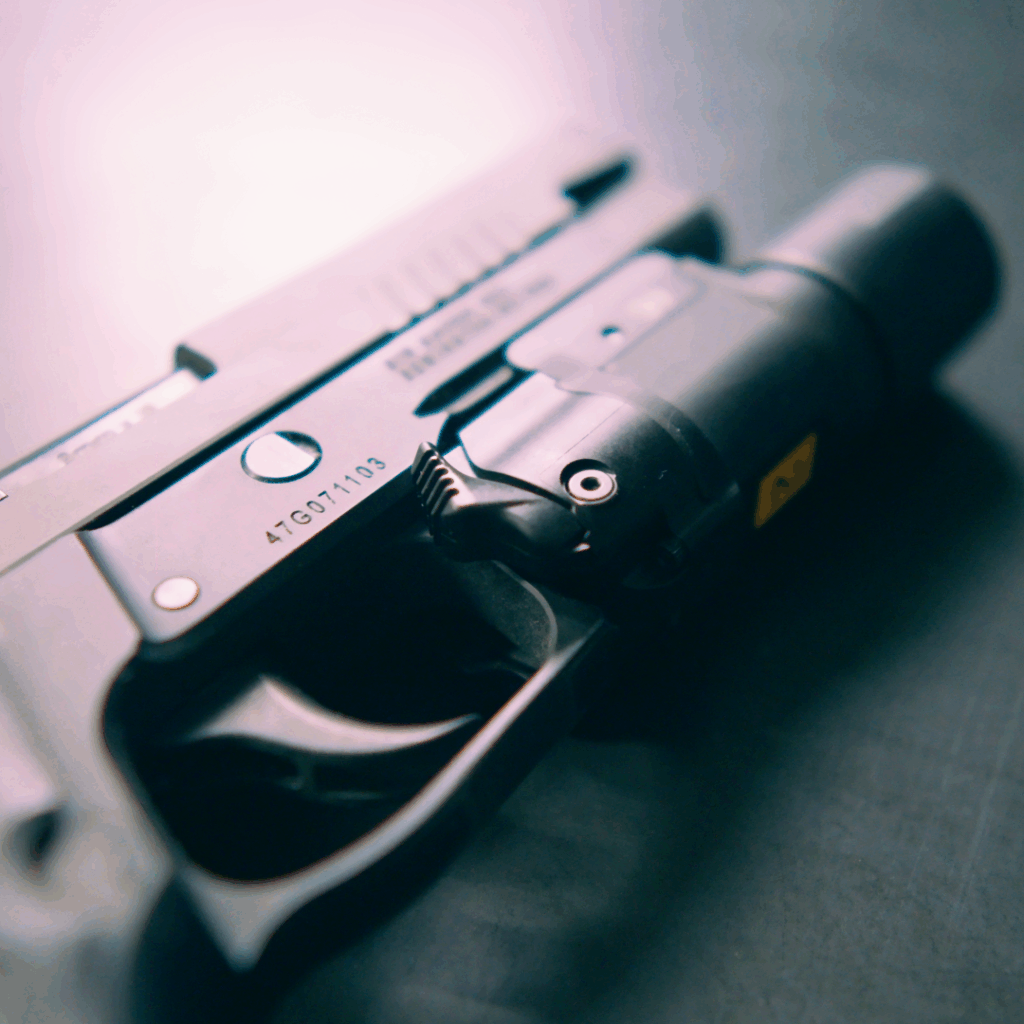
The switches take some getting used to, but I like that they’re swappable. They’re hinged at the bottom, not unlike the Fenix GL19R which we tested a few years ago. However, I’m having a tough time getting used to the light. It doesn’t feel as natural to me as the switches popularized by the TLR-7A from years ago. The EPL switches seem to require a forward press more than downward. If I’m trying to activate the light on draw, as is my custom, I often find myself missing the light or not putting enough pressure in the direction necessary to turn it on.
I applaud CD for trying something different. Perhaps the switches will work for you, but I find the switches on most modern competitive products to be superior.
Manufacturer’s Claims and Specs
| Spec | Claim |
| Lumens | 1,200 |
| Candela | 52,000 |
| Runtime | 40 Minutes |
| Price | $269.99 |
At 52,000 candela and 1,200 lumens, the output of the EPL should be about in-line with recent releases from competitive brands. The TLR-1HP* is an apt point of comparison, at 1,000 lumens and 65,000 candela, priced at ~$170. For $90 more, is the EPL a substantial upgrade?
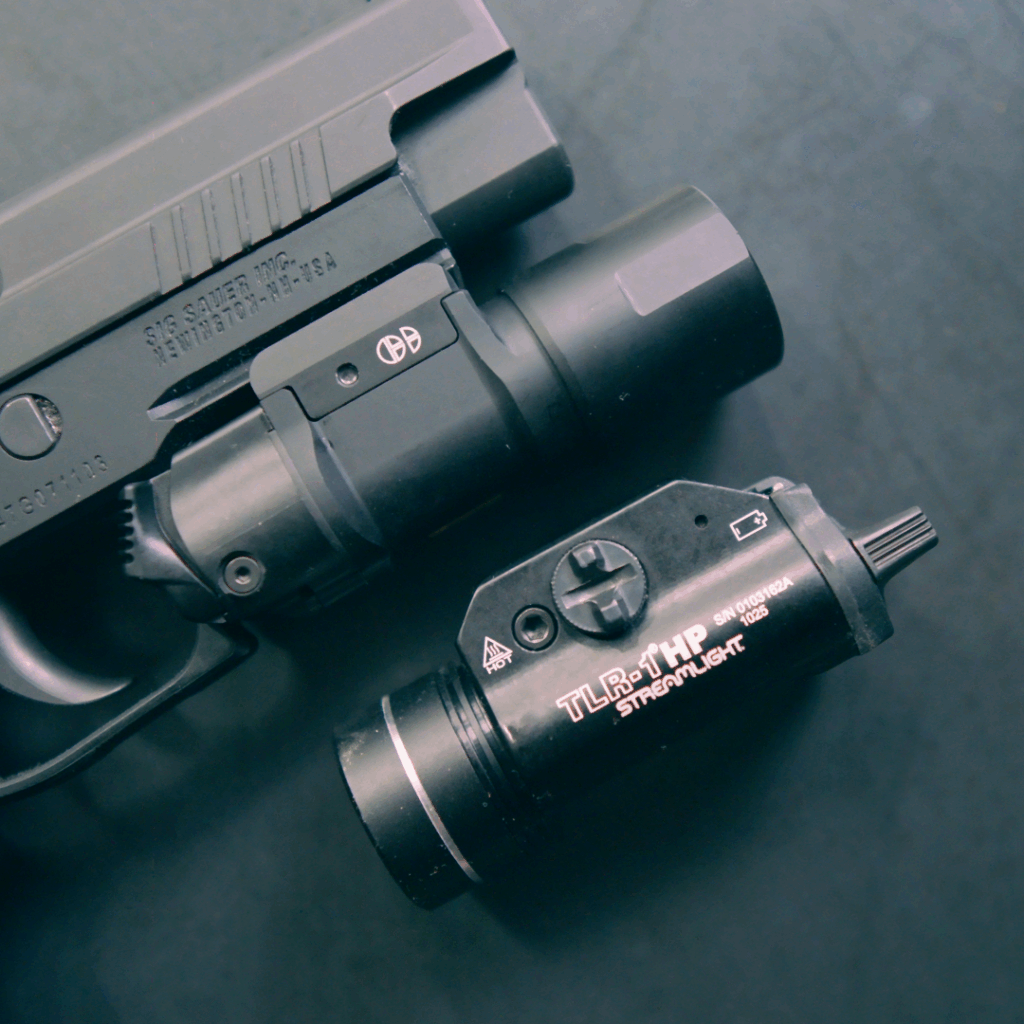
*Yes we resell the Streamlight TLR-1HP on our website. No it doesn’t influence the data. Streamlight has never compensated us for any review.
Into the Lab – Lumens, Runtime, Candela, Color Temp and CRI
Lumens and Runtime
First, let’s look at lumen output. As far as I can tell, the EPL is equipped with a Luminus SFT-40 LED. This LED is very common for throw-oriented handheld and pistol lights. One other light I’m almost certain utilizes this LED is the Sig Sauer Foxtrot4R, which claims 1,350 lumens output, meaning Cloud’s 1,200 lumen claim is reasonable.
Let’s get a closer look at the first ten minutes:
| Sample | Lumens (0s) | Lumens (30s) | Runtime (ANSI Plato) |
| Sample One | 1,324 | 1,214 | 35:20 |
| Sample Two | 1,117 | 1,015 | 34:34 |
| Sample Three | 1,270 | 1,152 | 32:33 |
Most notably from the charts above, sample two seems to be the dog of the group. For whatever reason, its output is about 200 lumens less than the brightest sample at thirty seconds. Additionally, it is uncommon for the output to drop, then rise back up as shown in the chart above. I’m concerned that this light may be defective, which I would not expect in a small sample set of 3 lights.
None of our samples reached the claimed runtime of 40 minutes, unless you consider a light emitting 19 lumens to still be “running.”
The ANSI/Plato lumens for the EPL Duty comes out to 1,127 overall, which is 94% of its specified output. Not bad.
The EPL’s output is nothing to sneeze at, but also nothing to write home about. It’s reasonable output for a modern pistol light equipped with an 18350 battery and an SFT-40 LED.
Candela
A big selling point of the EPL is its well-balanced beam profile, claiming to offer a good balance of throw and flood. This is important when it comes to tactical situations where both throw and flood are necessary to positively identify targets both far away and in the user’s periphery.
For reference, the Sig Sauer Foxtrot4R only claims 33,000 candela. I believe that it utilizes the same LED, with a similar reflector, thus I’m a little dubious of Cloud’s 52,000-candela claim.
Typically, manufacturer’s candela claims are based upon measurements at thirty seconds. Cloud doesn’t specify, so we’ll default to the industry standard. For reference, we also include output at the moment of turn-on. Here are our results:
| Candela (0s) | Candela (30s) | Claimed Output | % of Claim | |
| Sample One | 44,650 | 39,960 | 52,000 | 77% |
| Sample Two | 38,170 | 33,900 | 52,000 | 65% |
| Sample Three | 42,040 | 37,810 | 52,000 | 73% |
I’m disappointed, but I can’t say I’m surprised. 52,000 candela is optimistic (to say the least) given the EPL’s reflector geometry and LED setup. We’ve gone back and forth with manufacturers in the past regarding the results of our candela testing, but I can say with confidence that this light reaching only 71.6% of its claimed candela output at thirty seconds is poor.
Again, sample two struggles to keep up with the rest of the lights. Not sure what’s going on with it.
Regardless of Cloud’s claims, an average output of ~37,000 candela at thirty seconds isn’t bad. But it doesn’t blow my hair back, either.
So, the candela isn’t great. Let’s take a look at light quality.
Color Temp and CRI
This is where we get a little further into the weeds. In the past, Cloud was one of the few manufacturers that actually stressed the importance of light quality, specifically in regards to color temperature. An LED with a very cool (or blue-tinted) output generally hinders the user’s ability to positively identify a target and its colors. It’s a niche concern, but when manufacturers pay close attention to the details, it reflects a passion and a care for the product they produce.
Here’s the data from each sample:
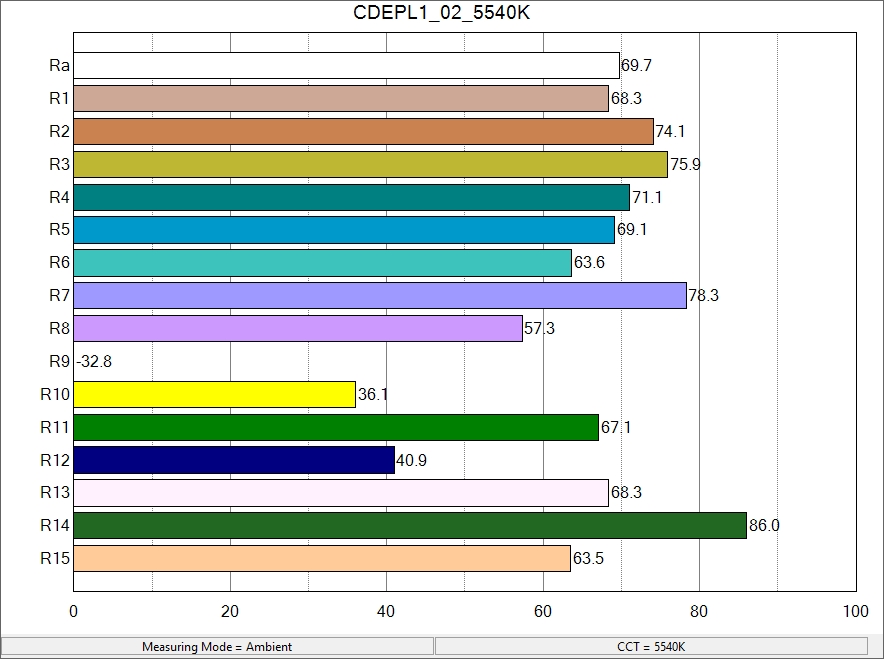
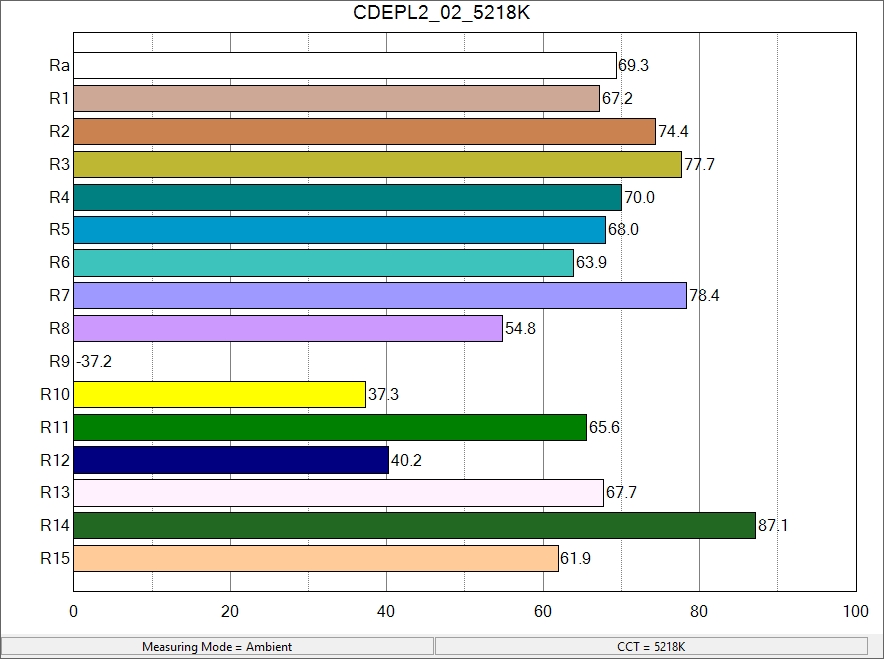
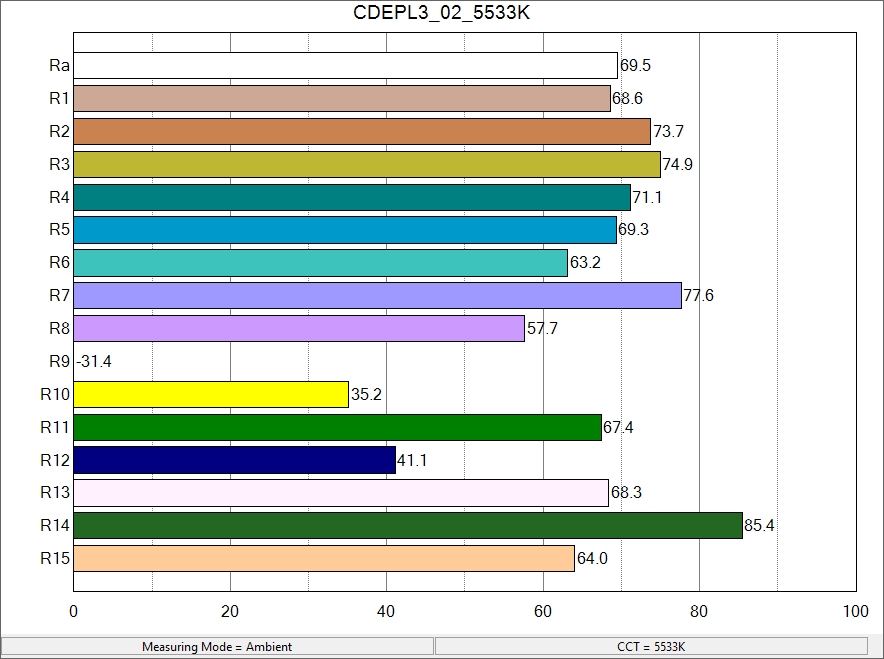
Here’s a table summarizing the most important elements of the chart:
| CRI | Color Temp | R9 | |
| Sample One | 69.7 | 5540K | -32.8 |
| Sample Two | 69.3 | 5218K | -37.2 |
| Sample Three | 69.5 | 5533K | -31.4 |
The color temp of the EPL is great – at an average of 5400K, it’s quite a bit “warmer” in appearance than most pistol lights. CRI is average at ~69, but R9 (which is a category LEDs usually struggle with) is very low, at negative 33.8 on average. This means red hues will not show up very well when illuminated by the EPL.
The color temperature is a nice surprise, and shows that Cloud remains committed to light quality in a way most light manufacturers aren’t.
Holster Compatibility
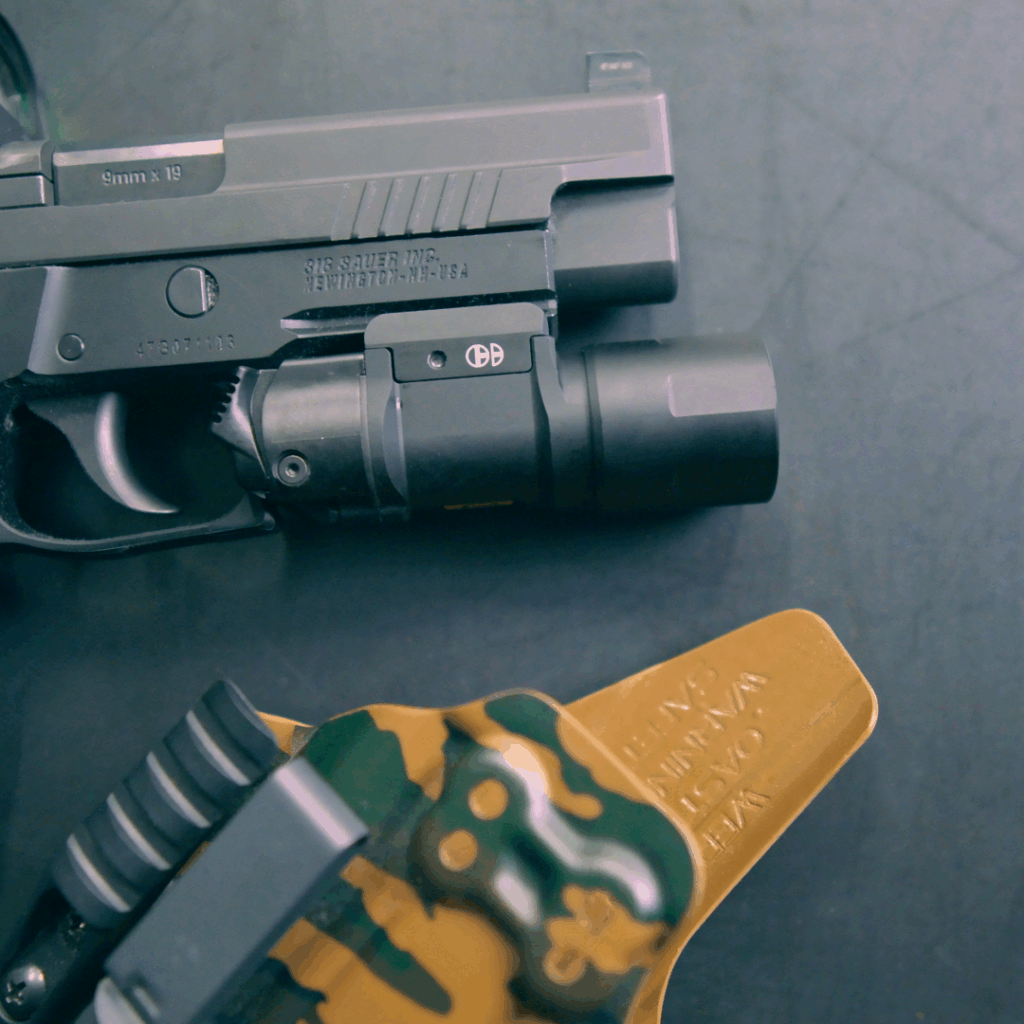
Cloud claims that, “In most cases the EPL will drop right in to all X300 and TLR-1 style light bearing duty holsters.” At Werkz, we don’t make duty holsters, but I can say with confidence that our precision-fit TLR-1 and X-300 holsters do not work with the EPL. The EPL is a loose fit in our TLR-1 holsters and won’t insert into our X-300 holsters at all.
I wouldn’t run the EPL in any holster until precision-fit options are available. It’s not worth the risk.
At the time of this writing, Werkz does have EPL holsters available for Glock pistols in M6 IWB and M7 OWB. Depending upon demand, we’ll add more options over the coming weeks / months.
Now that we’ve received samples, we’re developing holsters, Glock / EPL holsters should be available mid-December. Additional pistols will be supported as demand develops.
Durability
We tested a sample for durability. To see how it performed, watch our video here:
Conclusion
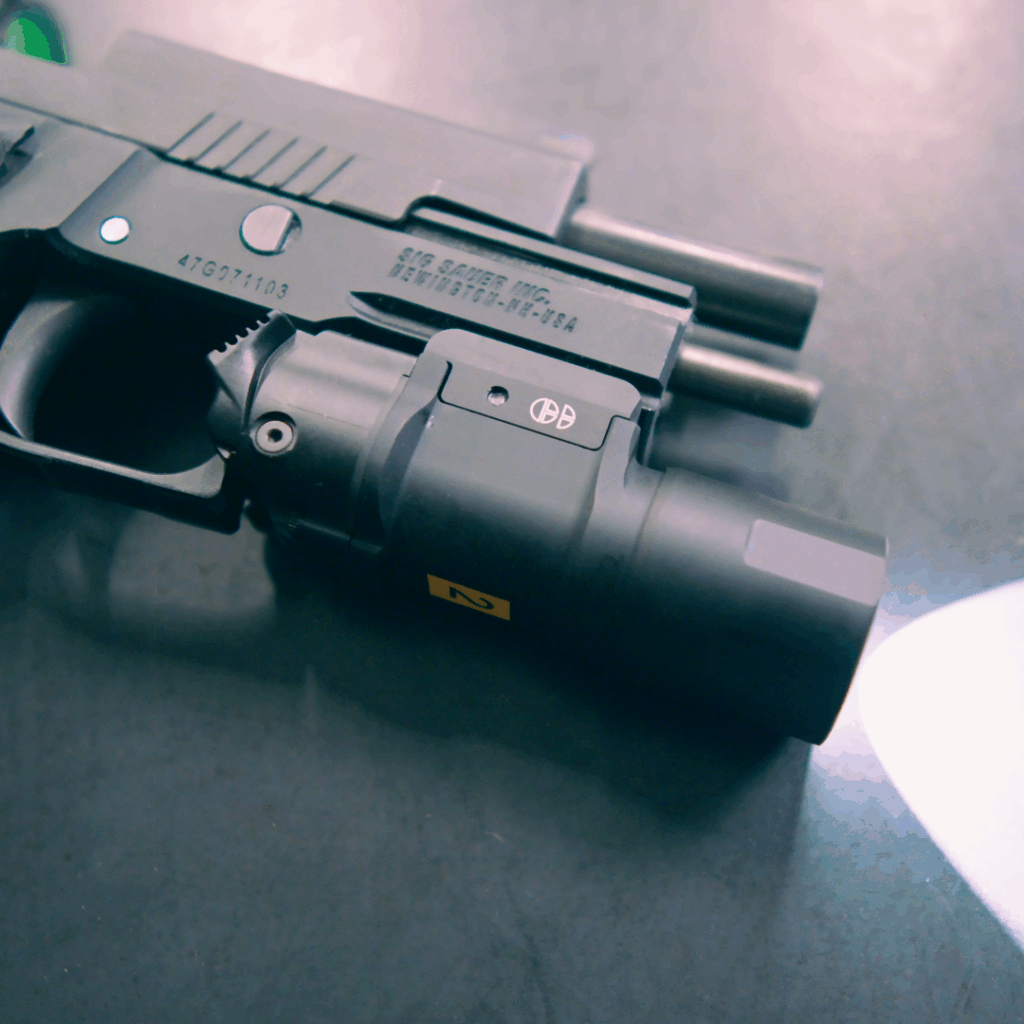
Cloud Defensive is a company synonymous with e-drama. I appreciate that they powered through and finally delivered the EPL, despite the setbacks, delays and leadership changes. I also appreciate that they are manufacturing their lights here in the States.
But it’s hard to ignore the fact that the EPL simply does not perform as advertised. The most recent Cloud handhelds we tested were the MCH-HC3, which only produced ~84% of their claimed candela and featured the worst thermal regulation I’ve ever seen, and also had significant performance variance from sample to sample.
Given that the Streamlight TLR-1HP performs every bit as well as the EPL, with existing holster support and proven reliability, while also being made in the States, it’s hard to justify spending $90 more on a light that offers less performance. Unless, of course, you already pre-ordered it and don’t have a choice.
Here’s a quick pro/con table for those considering the EPL:
| Pro | Con |
| Solid lumen output Made in USA Appears well-built Aesthetics Good color temperature Novel switch design | Reliability TBD Middling candela Novel switch design Inconsistent performance sample to sample |