
Introduction
Back in January, I saw Coast’s new lineup of pistol lights – the BRKR series – at their SHOT Show booth. Despite my initial skepticism about its zoom function, I’ve decided to let the numbers do the talking.
First Impressions
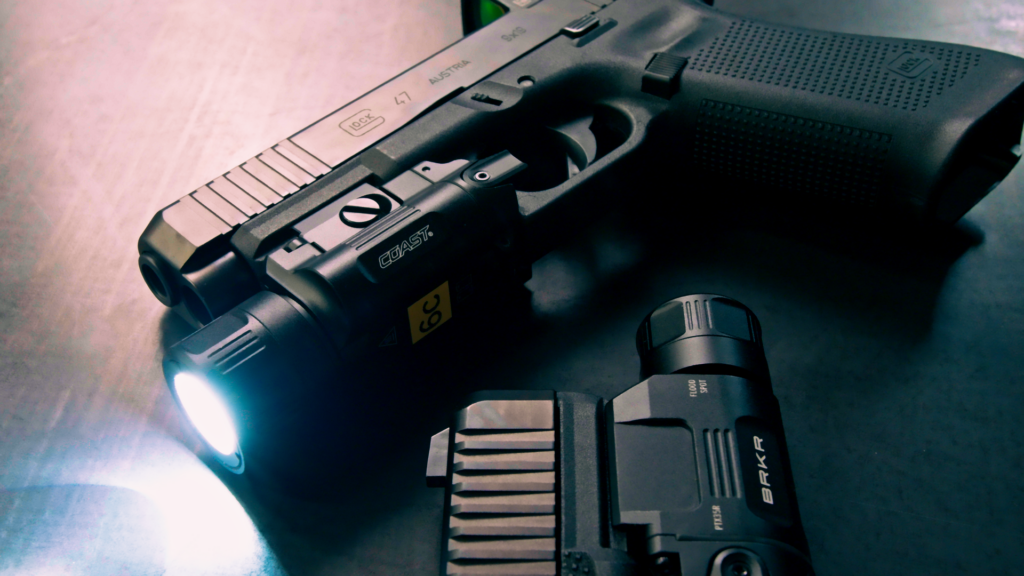
Coast has three lights in their BRKR series.
The PTX30R is the least expensive, and seemingly the most attractive option – with the highest candela, but lacking Coast’s signature zoomable lens.
The PTX35R has the same body as the -30R, but has a zoomable lens (but surprisingly, less candela than the fixed lens -30R).
The PTX65 has a larger body, which holds 2 CR123A-sized rechargeable batteries, with the highest price and specs of the lineup.
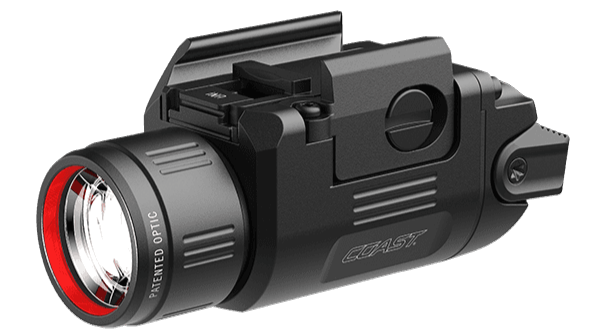
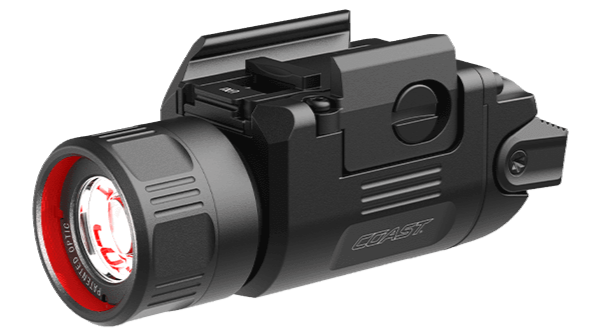
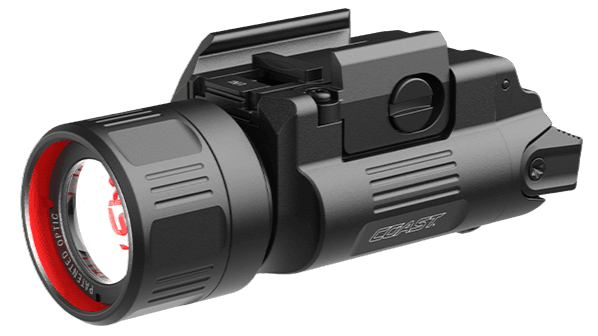
Left: Coast PTX30R, Middle: Coast PTX35R, Right: Coast PTX60R.
These lights appear well-built. On the 65R model, the rear battery door is attached via a hinge and a spring-loaded catch which allows for tool-less removal. On the 35R, the head threads off and the single battery comes out the front.
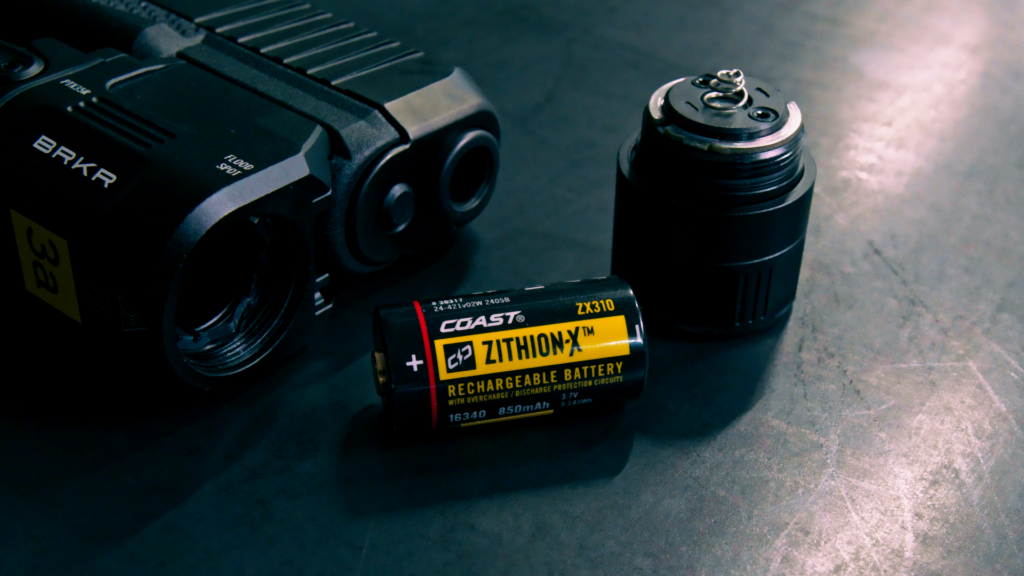
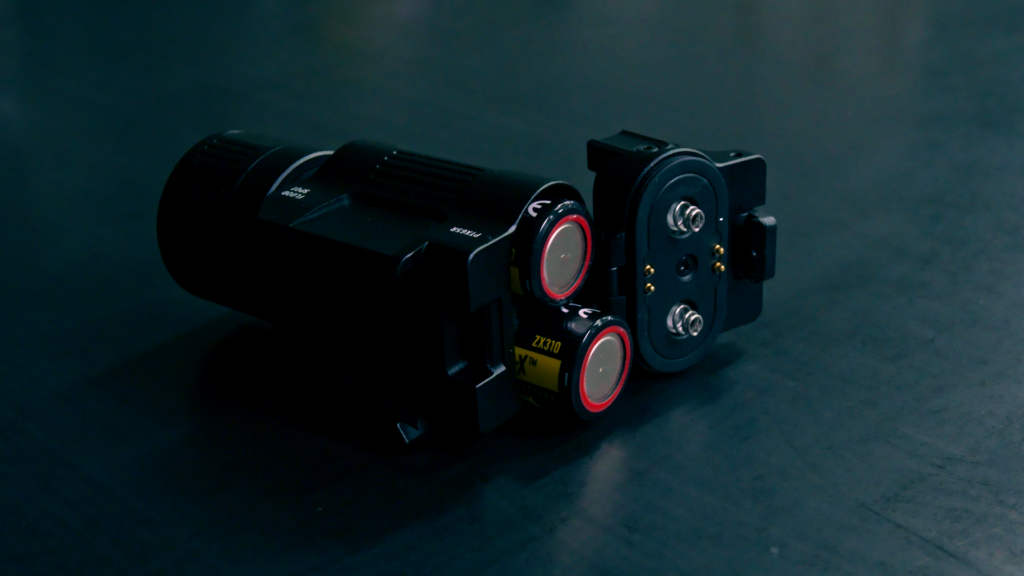
Left: Battery removed from Coast BRKR PTX35R. Right: Batteries removed from Coast BRKR PTX65R.
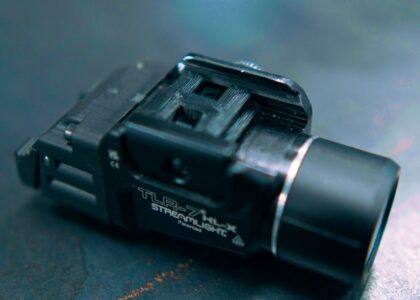
These lights are fairly large given their specs and capabilities. The 35R model, in particular, is noticeably larger than the diameter of its battery. Compare it to something like the TLR-7Sub, which houses the same size battery and emits the same amount of light, and the size difference becomes very apparent.
The zoom lenses are nicer than you’d expect. They have a detent in each position in order to resist movement under recoil (is what the guy told me, though I’ve not done any live fire with the light to confirm) and click nicely between positions. They do not allow for partial adjustment – it’s either spot mode, or flood mode.
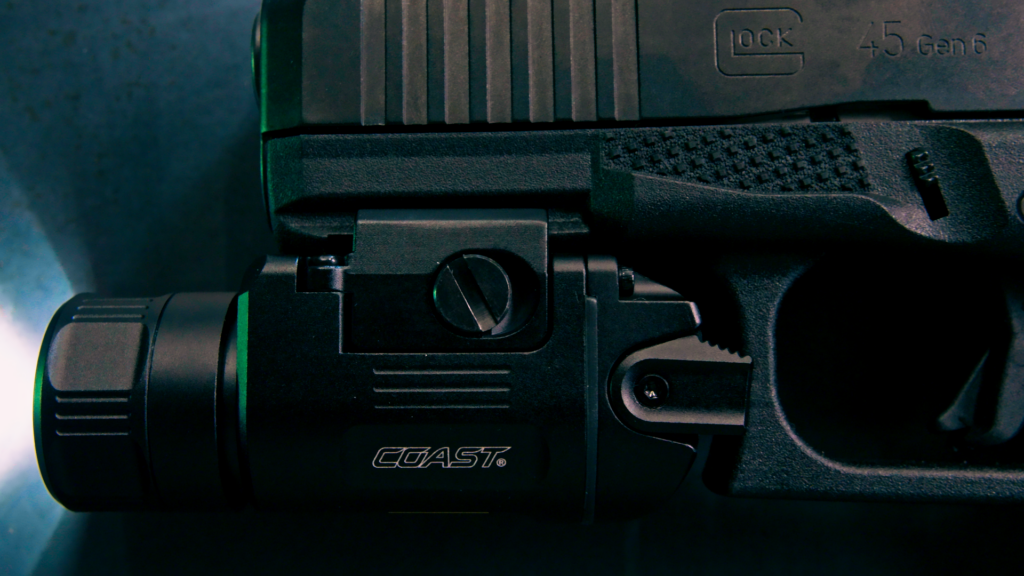
I don’t like the switches. They’re pokey and not very ergonomic. You might like them, but they aren’t for me. In all of Coast’s marketing (that I’ve seen), they are designed for trigger-finger activation, which is not my flavor.
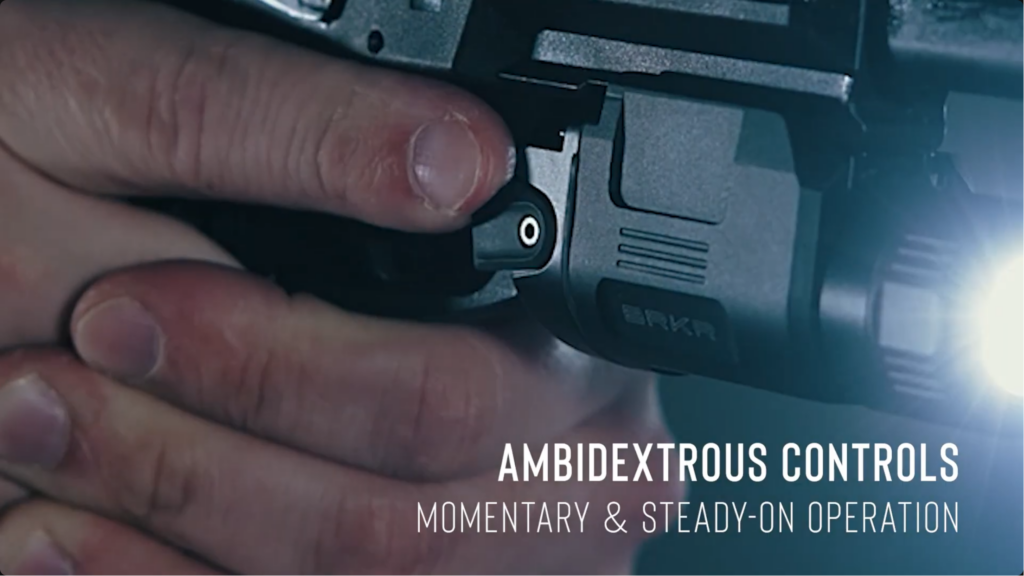
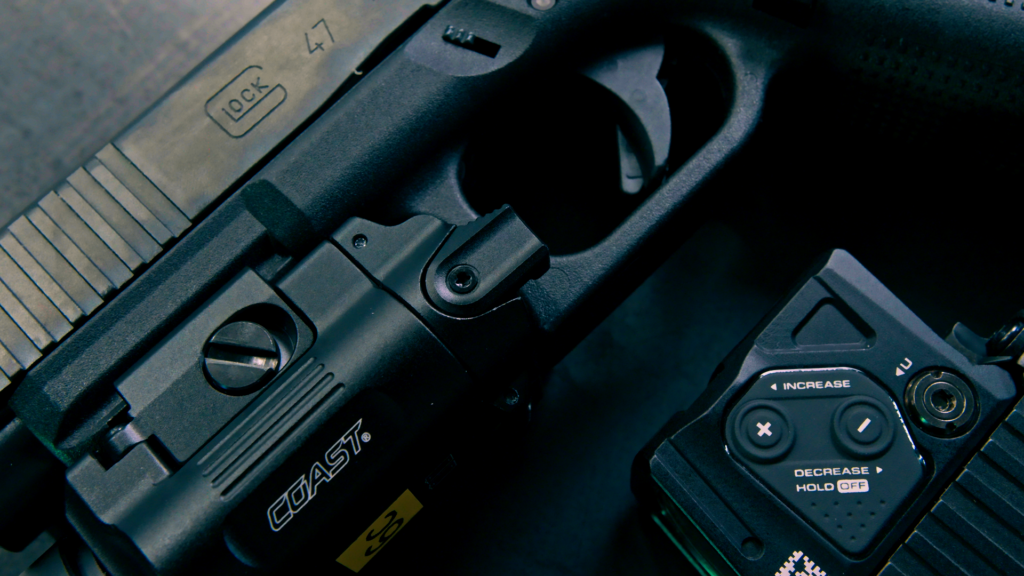
Left: from coast’s YouTube video on the PTX35R.
That said, Coast is a respected brand, and although these lights are made in China, their OEM seems to be doing a nice job.
Coast, TMTMTMTM
Coast really likes to trademark their terminology. I counted no fewer than six trademarked names used in the context of this light:
- Snap Focus™ beam system
- ULTRA-RANGE™ Spot
- CLEAR-VIEW™ Flood
- Tru-Fit™ Mounting System
- RECHARGEABLE+™
- COAST ZITHION™-X rechargeable battery
If you want the light with the most trademarks, Coast is the brand for you.
Manufacturer’s Claims and Specs
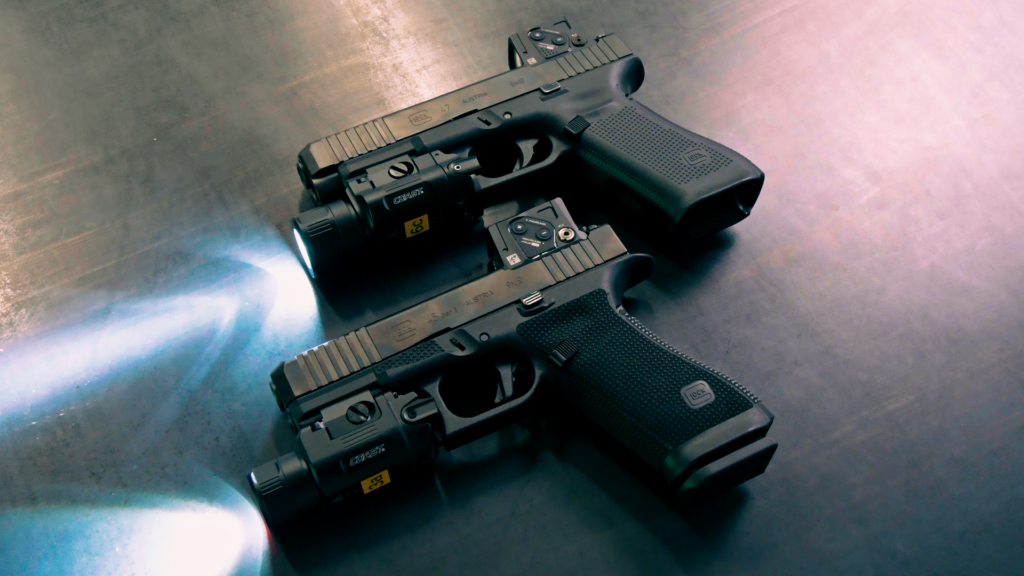
Here are the instruction manuals for the three lights:
https://www.lowlightdefense.com/wp-content/uploads/2026/06/PTX30R_instructions.pdf
https://www.lowlightdefense.com/wp-content/uploads/2026/06/PTX35R_instructions.pdf
https://www.lowlightdefense.com/wp-content/uploads/2026/06/PTX65R_instructions.pdf
The specs are located on Coast’s website, and are as follows:
| Spec | 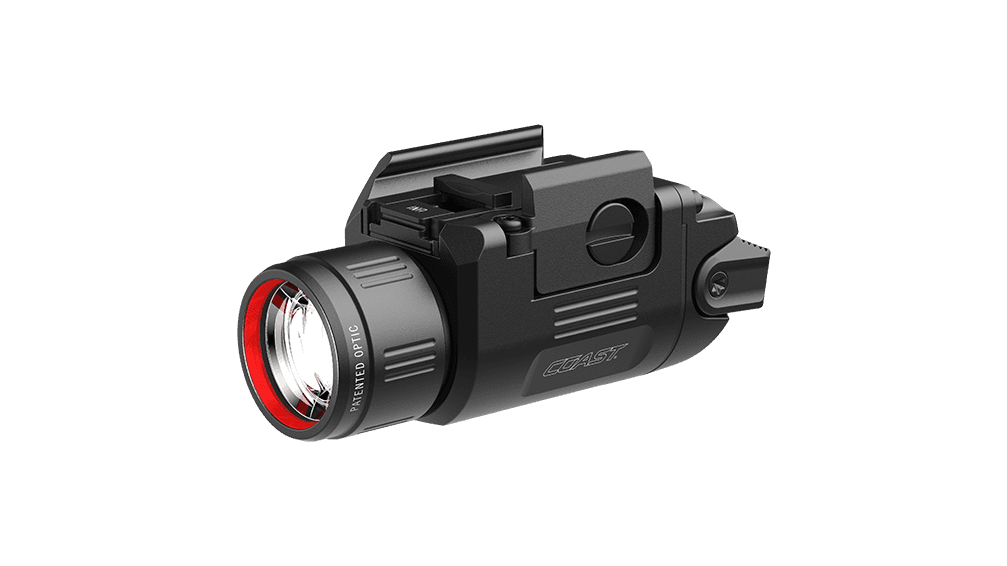 Coast BRKR PTX30R* | 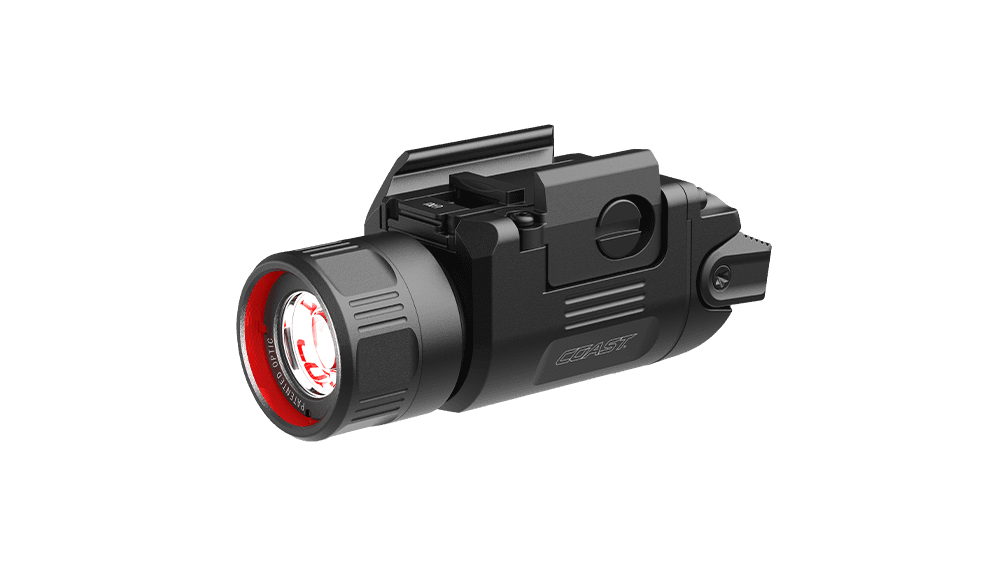 Coast BRKR PTX35R | 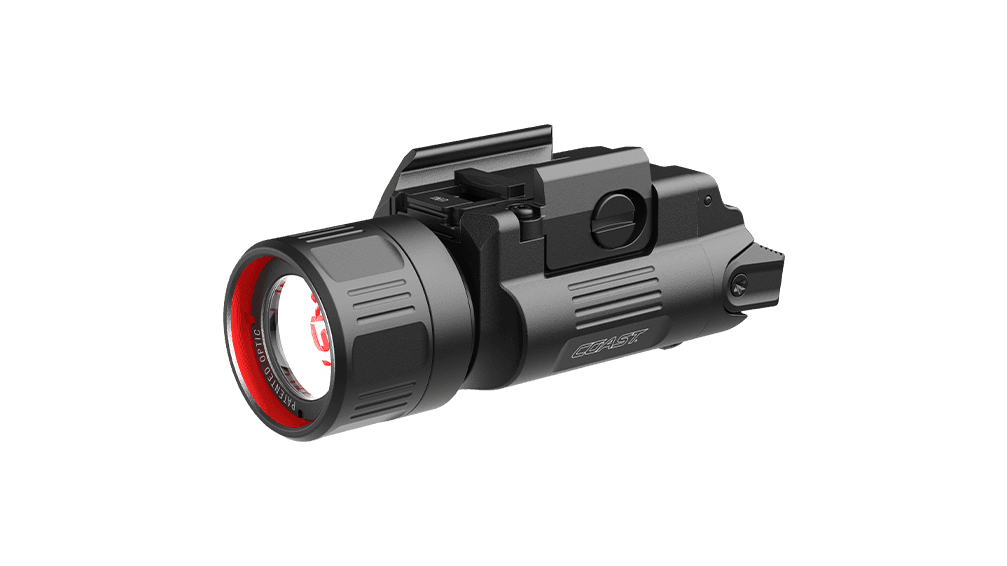 Coast BRKR PTX65R |
| Lumen claim | 500 | 500 | 1,000 |
| Candela claim | 27,300 | 16,900 | 38,000 |
| Runtime Claim | 1.5 Hours | 1.5 Hours | 1.25 Hours |
| Battery Type | ZX310 / CR123A | ZX310 / CR123A | 2x ZX310 / CR123A |
| Environmental Protection | IP54 | IP54 | IP54 |
| Focusing Type | ULTRA-RANGE™ Spot Beam FIXED | ULTRA-RANGE™ Spot CLEAR-VIEW™ Flood Snap Focus™ | ULTRA-RANGE™ Spot CLEAR-VIEW™ Flood Snap Focus™ |
| Price | ~$99.99, ~$85 street | ~$129.99, ~$80 street | ~$149.99, ~$120 street |
*note that we only have one sample of this light for review, as opposed to the others, for which we have three samples.
These specs look reasonable. As far as form factor, the PTX35R is a lot like the TLR-7 HL-X, which claims 22,000 candela. As for the PTX65R, it’s comparable in size to the TLR-1 HP, which claims 65,000 candela.
IP54 indicates that the light is protected from dust intrusion (ingress of dust is not entirely prevented, but it must not enter in sufficient quantity to interfere with the safe operation of the equipment) and that it is water resistant (water splashing against the enclosure from any direction shall have no harmful effect). As far as rail-mounted lights go, this is on the lower end of environmental protection. I suspect (but I don’t know) that this is due to the rotating and sliding lens mechanism that allows for the zooming.
Clearly, Coast was not aiming for the highest raw specs. I think they’re trying to do something a bit different here by offering two beam profiles in one light, thus bringing more value to the customer.
If the zoom feature isn’t valuable to you, theoretically the PTX30R offers greater performance than the TLR-7 HL-X for a fair amount cheaper. Then, it comes down to whether or not you like the switches on the Coast and trust it as much as Streamlight. We’ll see if this pans out in our testing.
Into the Lab: Lumens, Candela, Color Temperature and CRI
Lumens
Because I am testing six lights, I will run each for 2 hours in the integrating sphere. This exceeds their runtime claim by ~30 minutes, so we should be testing the entirety of their usable runtime.
Here is the data:
Here’s a closer look at the first ten minutes:
As indicated by the chart above, there is one “dog” of the group, the PTX65R sample 6a. It only produces ~970 lumens max. Otherwise, from a lumen output perspective, all these lights fared well.
Here’s how these lights perform individually. Lumen specs given by manufacturers (especially an ANSI-Plato founding member like Coast) are intended to indicate the light’s highest output between thirty seconds and two minutes, which is almost always at exactly thirty seconds. So let’s see how these lights stack up:
| Sample | Lumens (0s) | Lumens (30s) | Lumen Claim | % of Claim |
| Coast BRKR PTX35R 3a | 535 | 527 | 500 | 105% |
| Coast BRKR PTX35R 3b | 495 | 488 | 500 | 98% |
| Coast BRKR PTX35R 3c | 548 | 540 | 500 | 108% |
| Coast BRKR PTX30R 3d | 551 | 545 | 500 | 109% |
| Coast BRKR PTX65R 6a | 970 | 963 | 1,000 | 96% |
| Coast BRKR PTX65R 6b | 1,282 | 1,197 | 1,000 | 120% |
| Coast BRKR PTX65R 6c | 1,246 | 1,157 | 1,000 | 116% |
Here are the runtime numbers:
| Sample | Runtime | Runtime Claim | % of Claim |
| Coast BRKR PTX35R 3a | 1:39:20 | 1:30 | 110% |
| Coast BRKR PTX35R 3b | 1:35:58 | 1:30 | 107% |
| Coast BRKR PTX35R 3c | 1:40:01 | 1:30 | 111% |
| Coast BRKR PTX30R 3d | 1:43:59 | 1:30 | 116% |
| Coast BRKR PTX65R 6a | 1:15:34 | 1:15 | 101% |
| Coast BRKR PTX65R 6b | 1:18:31 | 1:15 | 105% |
| Coast BRKR PTX65R 6c | 1:23:50 | 1:15 | 112% |
I respect that all of these lights met or exceeded their specs, with only one exception. Most flashlight companies are not so honest about the output of their products. Well done to the engineers and the marketing team at coast.
Candela
Here are the candela numbers, in spot mode, taken once at turn-on and again at thirty seconds (which is the more important number).
Here are the numbers from our single sample of the PTX30R:
| Sample PTX30R | Candela (0s) | Candela (30s) | Candela Claim | % of Claim |
| Coast BRKR PTX30R 3d | 30,270 | 29,730 | 27,300 | 109% |
Here are numbers for the Coast BRKR PTX35R:
| Sample PTX35R | Candela (0s) | Candela (30s) | Candela Claim | % of Claim |
| Coast BRKR PTX35R 3a | 19,430 | 19,210 | 16,900 | 113% |
| Coast BRKR PTX35R 3a | 21,010 | 20,670 | 16,900 | 122% |
| Coast BRKR PTX35R 3c | 20,760 | 20,160 | 16,900 | 119% |
And here they are for the Coast BRKR PTX65R:
| Sample PTX65R | Candela (0s) | Candela (30s) | Candela Claim | % of Claim |
| Coast BRKR PTX65R 6a | 38,250 | 34,460 | 38,000 | 90% |
| Coast BRKR PTX65R 6b | 42,950 | 38,960 | 38,000 | 103% |
| Coast BRKR PTX65R 6c | 43,500 | 40,130 | 38,000 | 105% |
I couldn’t find a specific candela claim for the “flood” mode on these lights, so here’s my numbers:
| Sample PTX35R | Candela (0s) | Candela (30s) |
| Coast BRKR PTX35R 3a | 1,050 | 1,020 |
| Coast BRKR PTX35R 3b | 1,010 | 990 |
| Coast BRKR PTX35R 3c | 990 | 960 |
| Sample PTX65R | Candela (0s) | Candela (30s) |
| Coast BRKR PTX65R 6a | 2,550 | 2,340 |
| Coast BRKR PTX65R 6b | 2,610 | 2,370 |
| Coast BRKR PTX65R 6c | 2,740 | 2,530 |
As the results would suggest, “flood” mode is very floody. If this is your preferred mode/style of beam, then don’t expect this light to project very far.
Color Temperature and CRI
Here is the full color temp/CRI info for each sample:
https://www.lowlightdefense.com/?p=4758
But here’s the most important stuff:
| PTX30R Sample | Color Temperature | CRI | R9 |
| D | 6152K | 71.6 | -24.8 |
| PTX35R Sample | Color Temperature | CRI | R9 |
| A | 6208K | 70.9 | -24.4 |
| B | 6220K | 71.0 | -27.5 |
| C | 6378K | 70.9 | -17.0 |
| Average | 6268K | 70.9 | -22.9 |
| PTX65R Sample | Color Temperature | CRI | R9 |
| A | 6091K | 70.2 | -25.1 |
| B | 6285K | 71.1 | -20.6 |
| C | 6304K | 70.9 | -24.3 |
| Average | 6226K | 70.7 | -23.3 |
Overall, the Coast lights produce a light quality typical of pistol lights – which is to say, poor. Both lights have color temperatures above 6000K, meaning the light is very cool/blue, and with low CRI and R9, colors will be distorted or washed out. Unfortunately, this is the industry standard, and there is no real option for those who want better light quality. So it goes.
Conclusion
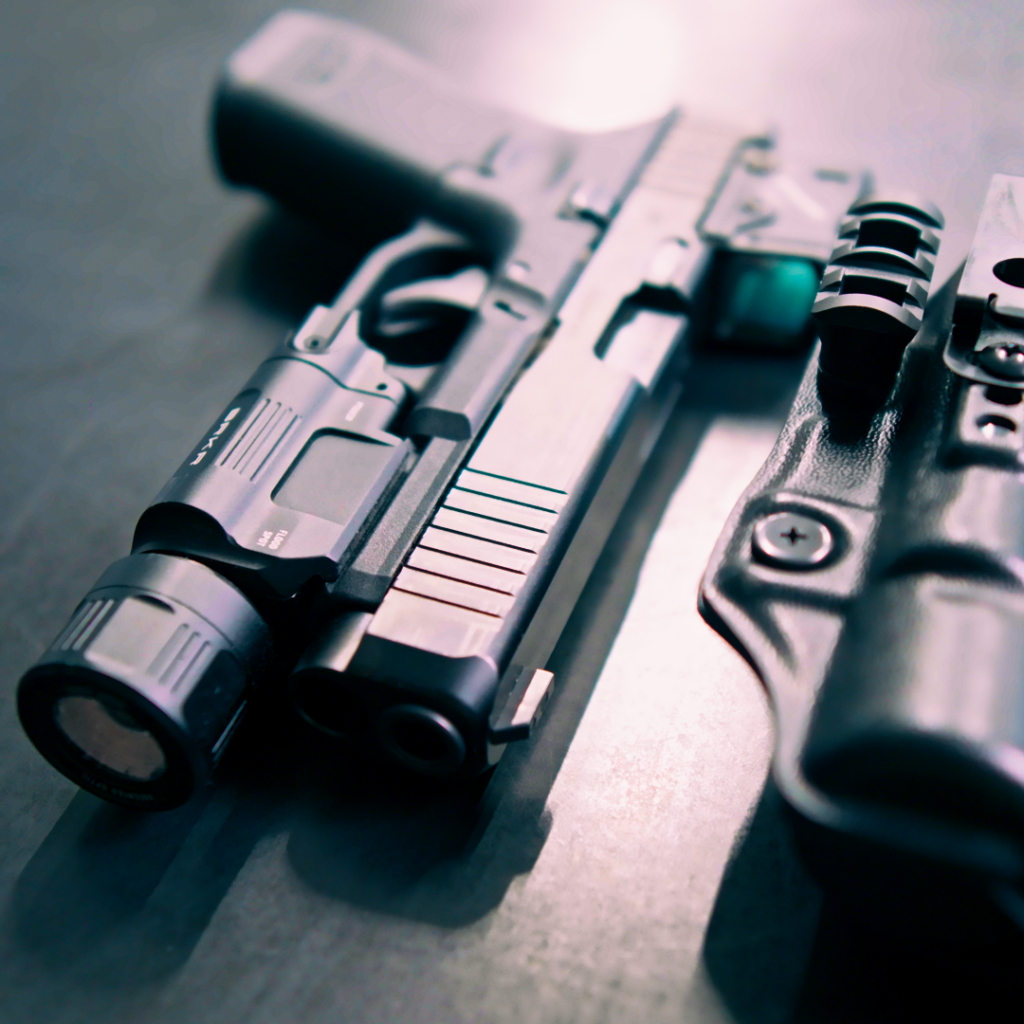
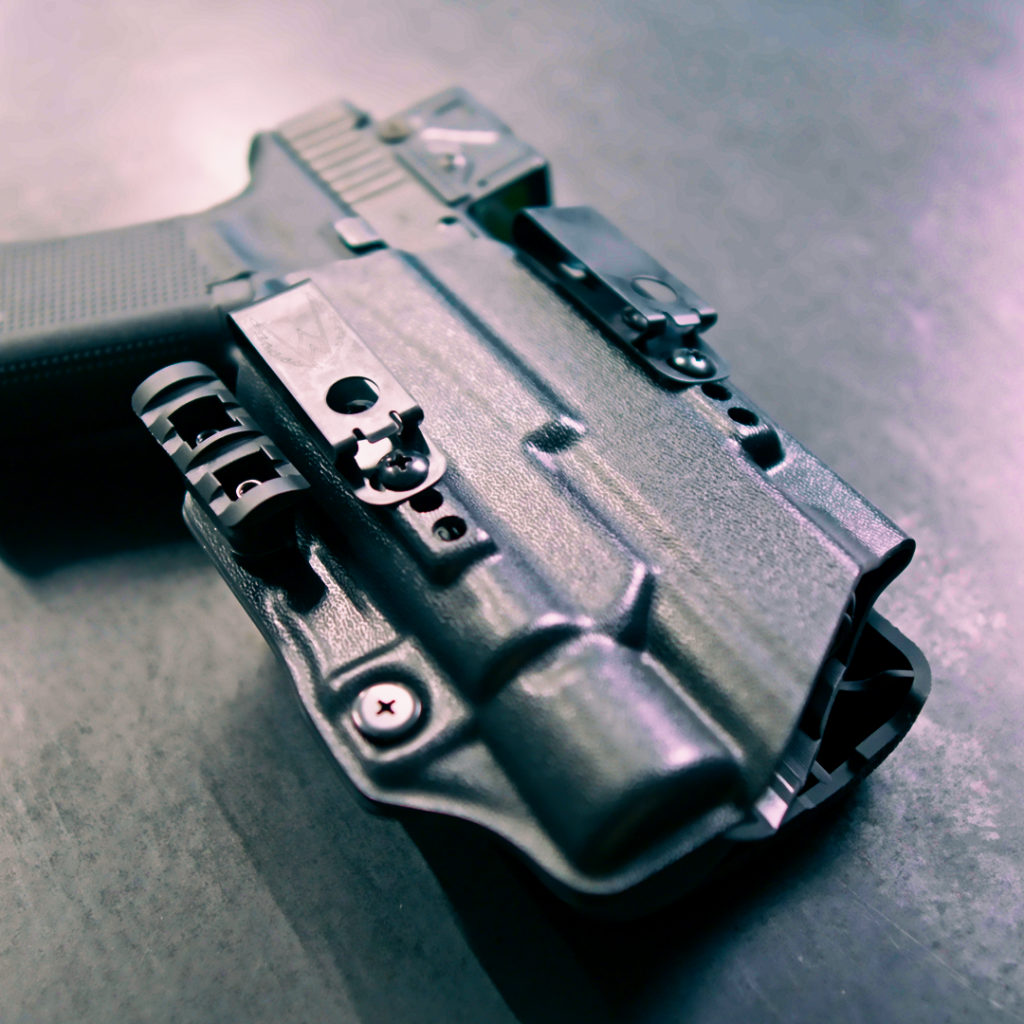
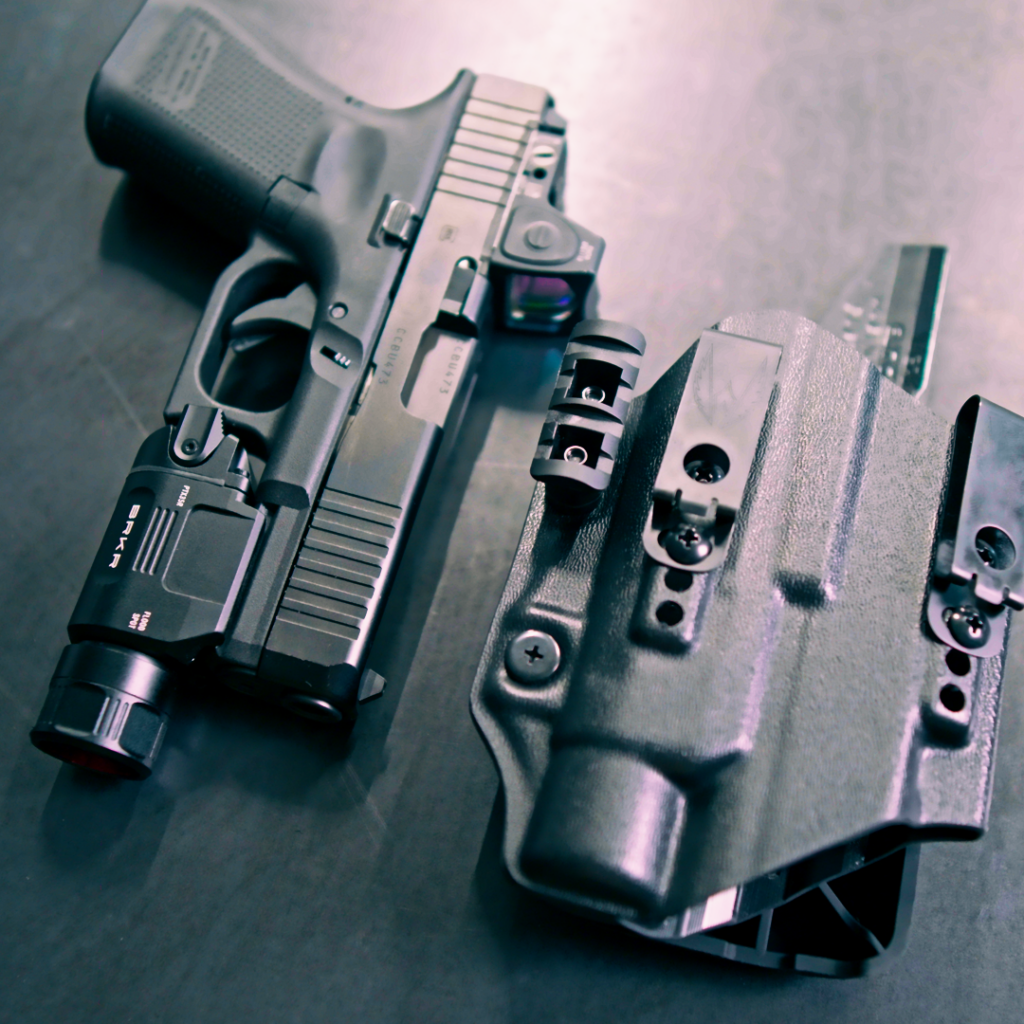
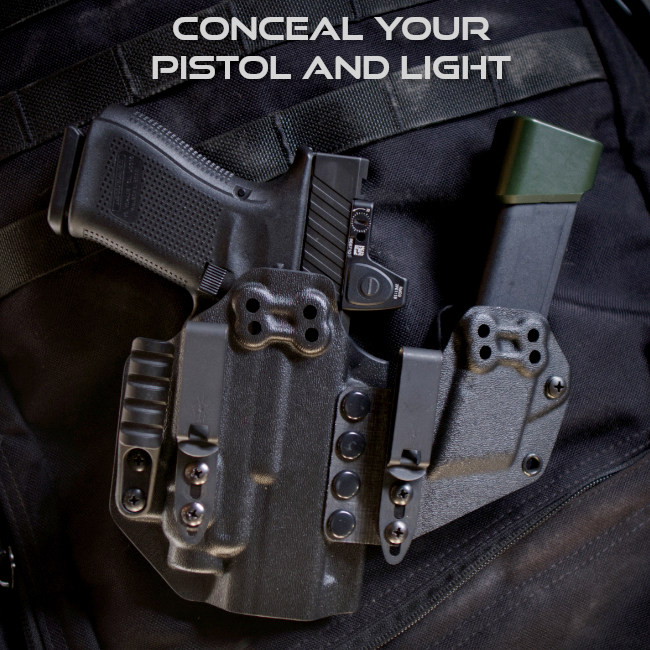
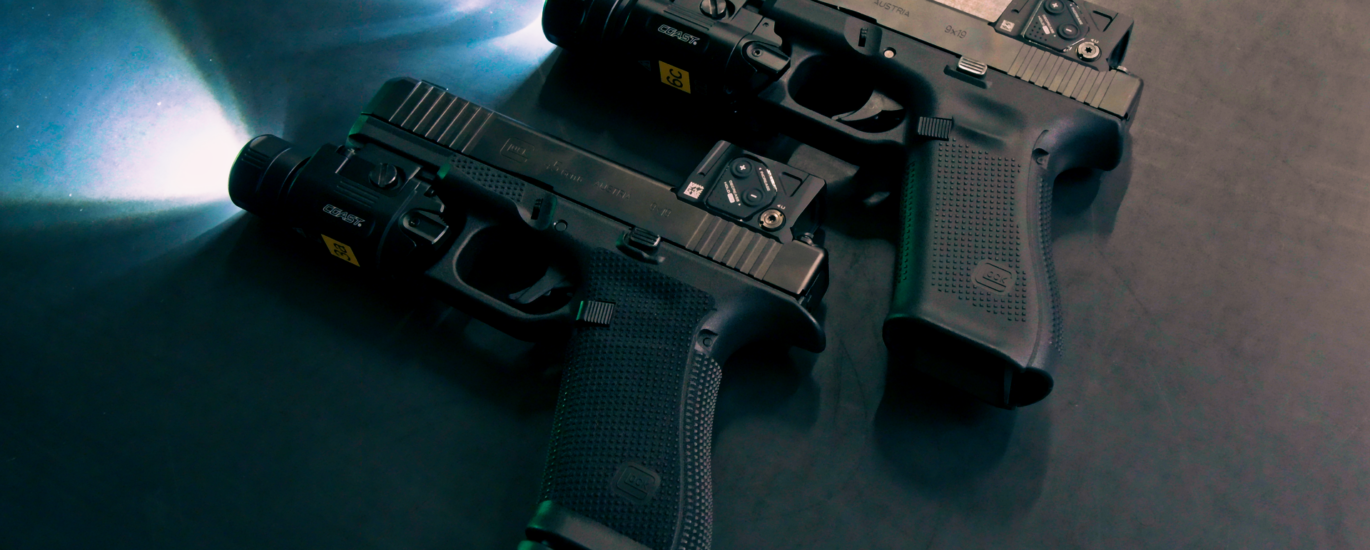
Left, middle: our Bisect Holster for the PTX65R with the Glock 47/17 etc. Right: Bisect for the PTX35R with the Glock.
BONUS: The (current) LED (probably)…
This is speculative, but I’m fairly confident these lights are using Cree’s new round-LES XP-GR and XP-LR LEDs—most likely the XP-GR in the PTX35R and the XP-LR in the PTX65R.
Rather than using a traditional square light-emitting surface, these LEDs use a round LES. Cree says this design “improves the quality of projected light through optics,” which would make sense for Coast’s zoomable “Snap Focus” system. It would also line up with Coast’s claim that the BRKR lights use a “specialized CREE LED.” Cree’s own launch material for the XP-GR and XP-LR even uses a zoomable flashlight as an example application.
For anyone curious, here are the datasheets for the two LEDs I suspect may be in these lights:
https://www.lowlightdefense.com/wp-content/uploads/2026/06/XLamp-XPLR.pdf
https://www.lowlightdefense.com/wp-content/uploads/2026/06/XLamp-XPGR.pdf
My measured results are also consistent with this theory. Both BRKR models measured around 6200–6300K and approximately 71 CRI, which lines up closely with the available 6500K, 70-CRI versions of these LEDs.
The XP-GR is capable of around 1,200 lumens and is a logical fit for the 500-lumen PTX35R. The larger XP-LR is capable of around 1,630 lumens, giving it more appropriate output and thermal headroom for the 1000-lumen PTX65R.
Cree currently lists only three portable-light LEDs with round light-emitting surfaces: the XP-GR, XP-LR and the larger XM-MR. The XM-MR is a much larger, higher-current emitter with an output capability approaching 2,850 lumens, making it a less logical choice for either of these pistol lights. It’s unlikely that Cree developed a completely custom, Coast-exclusive emitter for a relatively low-volume pistol-light application, so our suspects are almost certainly the XP-GR and the XP-LR.
None of this is confirmed. Coast does not identify the exact LED in its published materials, and they have not confirmed it in any of my interactions with them. Still, the available evidence points pretty strongly in this direction.
Regardless, it’s interesting to see the industry so determined to switch over to round-die LEDs. Modlite, Olight, SureFire, and others have all implemented round-die LEDs in at least some of their recent lights. They are ideal candidates to cater to the candela craze, so their widespread adoption makes sense.
Final Considerations
My feelings are mixed. If you can get over the switches, and if you like the unique features of the light, then its price is approachable enough to give it a try. Here’s a quick pro/con chart for those on the fence:
| Pro | Con |
| Unique zoom feature Reputable, established brand Rechargeable, duel-fuel Good Output Good warranty Affordable Holster compatibility (Werkz) | Made overseas Switches “Compact” lights larger than others in segment Low environmental resistance |
Overall, I applaud Coast for making a light that lives up to its specs and brings something new to the table. That said, it won’t be replacing my TLR-7 HL-X, and if I was looking to run something larger on my handgun, it would likely be the TLR-1 HP. The zoom feature doesn’t do it for me, because I make the choice between spot or flood at the time I purchase a light. After that, I can’t really imagine a scenario in which I would want to change from flood to spot. I had the same critique for the Olight PL X, which also allows for spot and flood modes, albeit using a different method.
If you’re interested in carrying your Glock 9mm with this light, we do have a selection of precision-fit holsters available here: https://werkz.com/lightbearingholster/coast.html
If you have a different opinion on the Coast light, please let me know. I’m sure the engineers at Coast did their fair share of market research before coming to market with this product – so maybe I’m just not the target audience. What do you think?