
Introduction
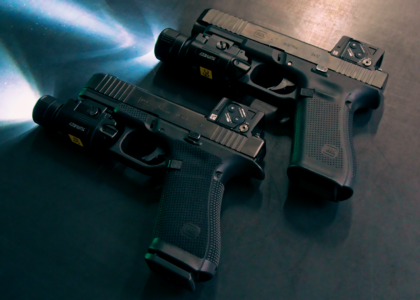
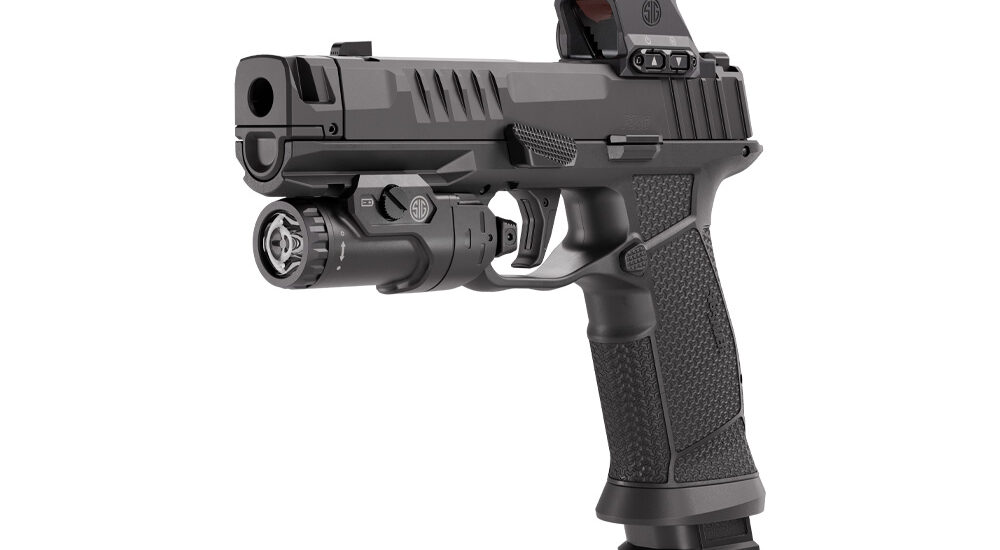
SIG Sauer has done something I haven’t seen from any other light maker: it built a pistol light that talks to the optic. The new FOXTROT2R LightFight is a 700 lumen, 20,000 candela weapon light with a Bluetooth link to SIG’s new XRAY5 red dot. Turn the light on and the dot gets brighter. Turn it off and the dot drops back down. SIG calls the link LightFight, and it’s the whole reason this light exists.
SIG unveiled the light at its SIG NEXT event in late September alongside the XRAY5, and The Firearm Blog covered the details in October. As I write this, SIG’s product page says “Coming Soon” at $199.99, and no retailer I’ve checked has stock. Here’s what we know so far, and what it means if you carry a FOXTROT2R today.
What LightFight actually does
Anyone who has run a red dot with a bright weapon light knows the problem. Your dot is set for the ambient light around you, then you hit the switch and the target lights up like a stage. A dot that was fine a second ago is now washed out against a white wall. Auto-brightness optics don’t help much, because the sensor is looking at the light around the optic, not the light on the target.
LightFight sidesteps the sensor. The light tells the optic when it is on, and the XRAY5 jumps its reticle brightness immediately, then returns to your normal setting when the light goes off. It is not an auto-brightness mode. It only reacts to the light, so the dot isn’t chasing changing conditions on its own. SIG says it works with all four XRAY5 models (Enclosed PRO, Enclosed COMPACT, SIG-LOC PRO and SIG-LOC COMPACT), and pairing is done through the XRAY5 phone app. SIG also sells the pair as a kit: $699.99 with the XRAY5 PRO and $649.99 with the COMPACT, per TFB.
I’ll admit I’m of two minds. The problem is real. I’ve struggled to find the dot myself, standing in a dark room with the optic in auto mode, the dot dialed down to match the darkness around me, and then the light goes on and the target is suddenly bright while the dot is still set for the dark. But LightFight only works if you buy into SIG’s optic as well as SIG’s light, and it adds a radio and a pairing step to two things that used to be dead simple. Whether that trade is worth it is exactly what I want to hear from you in the comments.
The light itself
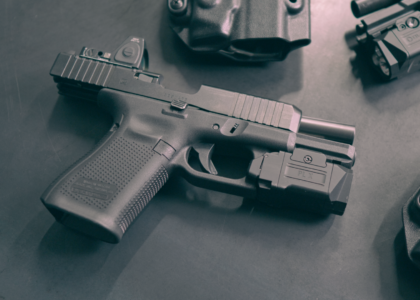
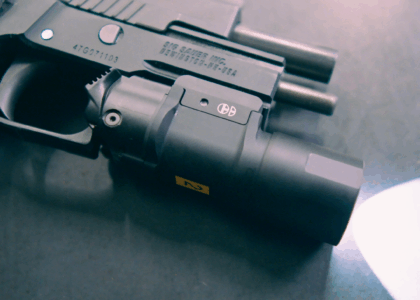
Strip away the Bluetooth and this is a FOXTROT2R with a few refinements. SIG’s published specs:
- 700 lumens and 20,000 candela, the same claims as the current FOXTROT2R, with up to 1.5 hours of runtime.
- FlexCore dual fuel: runs on the included rechargeable 16340 or a standard CR123A. Two 16340 cells come in the box.
- Ambidextrous paddles with Momentary, Latching and Threshold modes, and three user-selectable activation modes, so you can set up a short press for constant-on and a long press for momentary if that’s how you were trained.
- Four-position sliding rail inserts, plus two rail interface inserts in the box, one for MIL-STD-1913 rails and one for pistols with non-standard rails.
- 6061 aluminum body, black anodized, IPX7, assembled in the USA, covered by SIG’s Infinite Guarantee.
- 2.98 inches long, 1.18 wide, 1.31 tall, and 2.9 ounces without a battery, per SIG’s operator’s manual.
That last line matters more than it looks, and I’ll get to it in a moment.
How the FOXTROT2R stacks up today
We haven’t had a LightFight in the lab, but we have tested the FOXTROT2R it’s based on. Back in 2023 it measured around 840 lumens and just under 15,000 candela at 30 seconds, which still makes it one of the most intense lights in its size class. For context, the Streamlight TLR-7X we measured produced roughly 590 lumens and 4,000 candela on its rechargeable cell. You can see the two side by side, with runtime curves and color data, in our Light Lab Comparator: FOXTROT2R vs TLR-7X. If SIG’s claims hold, the LightFight should land in the same place, and it’s one we’d like to get into the lab.
Holsters: the LightFight needs its own fit
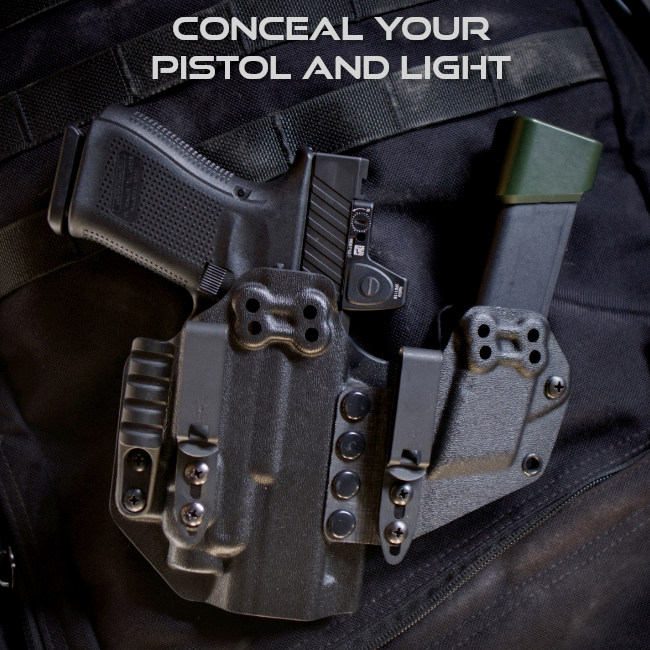
Disclosure: Low Light Defense is affiliated with Werkz LLC, which makes light-bearing holsters, so this is the part of any new light I pay the closest attention to.
SIG’s manual lists the LightFight at 2.98 inches long, and SIG’s own spec table puts the standard FOXTROT2R at 2.79 inches overall. To see where that extra length went, I took SIG’s product photos of both lights, scaled them to the same bezel diameter (both use a 24 mm maintube) and laid them out together. From the bezel back through the switch housing and the rail clamp, they are the same light. All of the extra length is behind the clamp, in a longer, squarer rear housing where the radio and the new vents live, and the paddles move back with it.
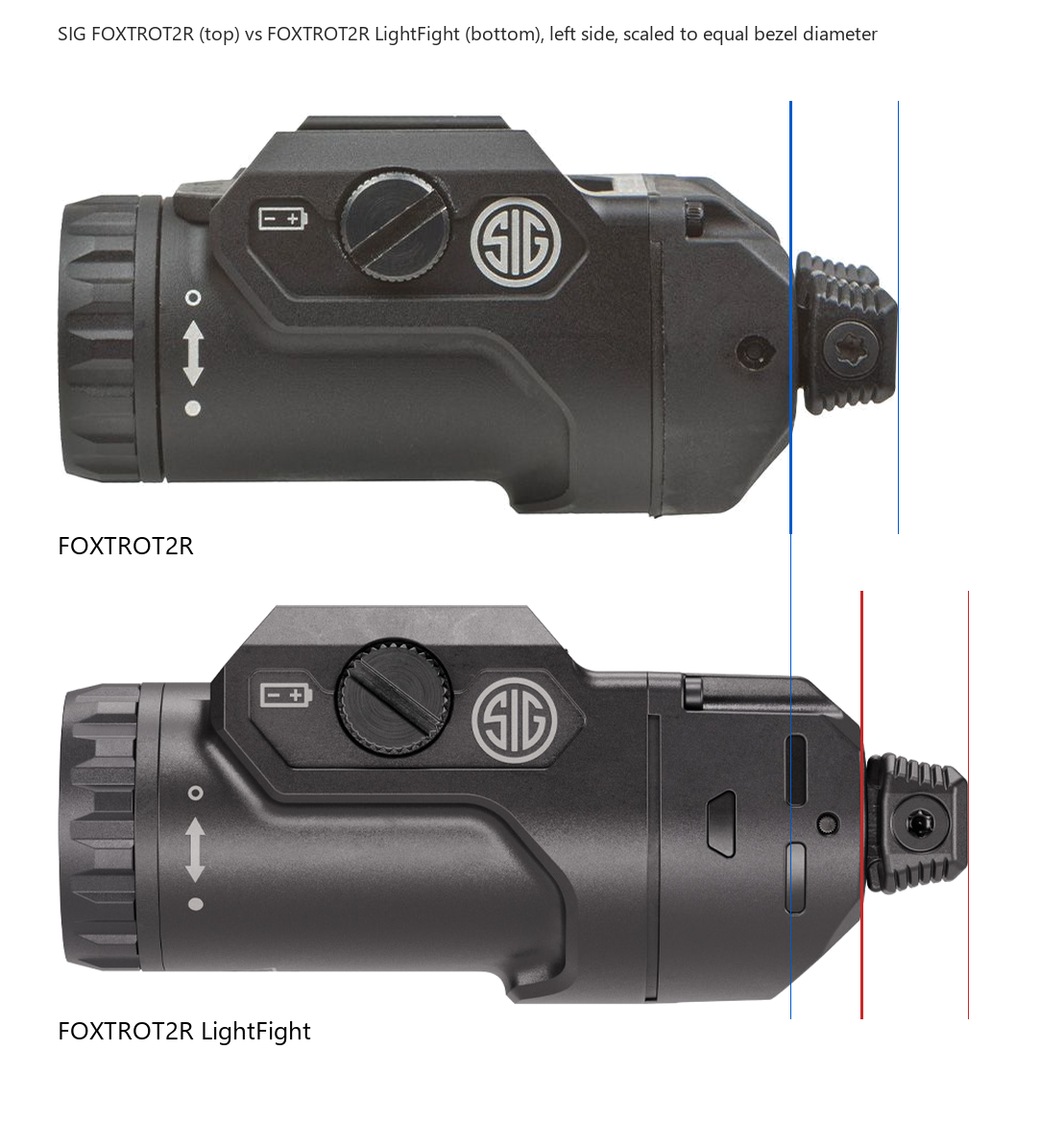
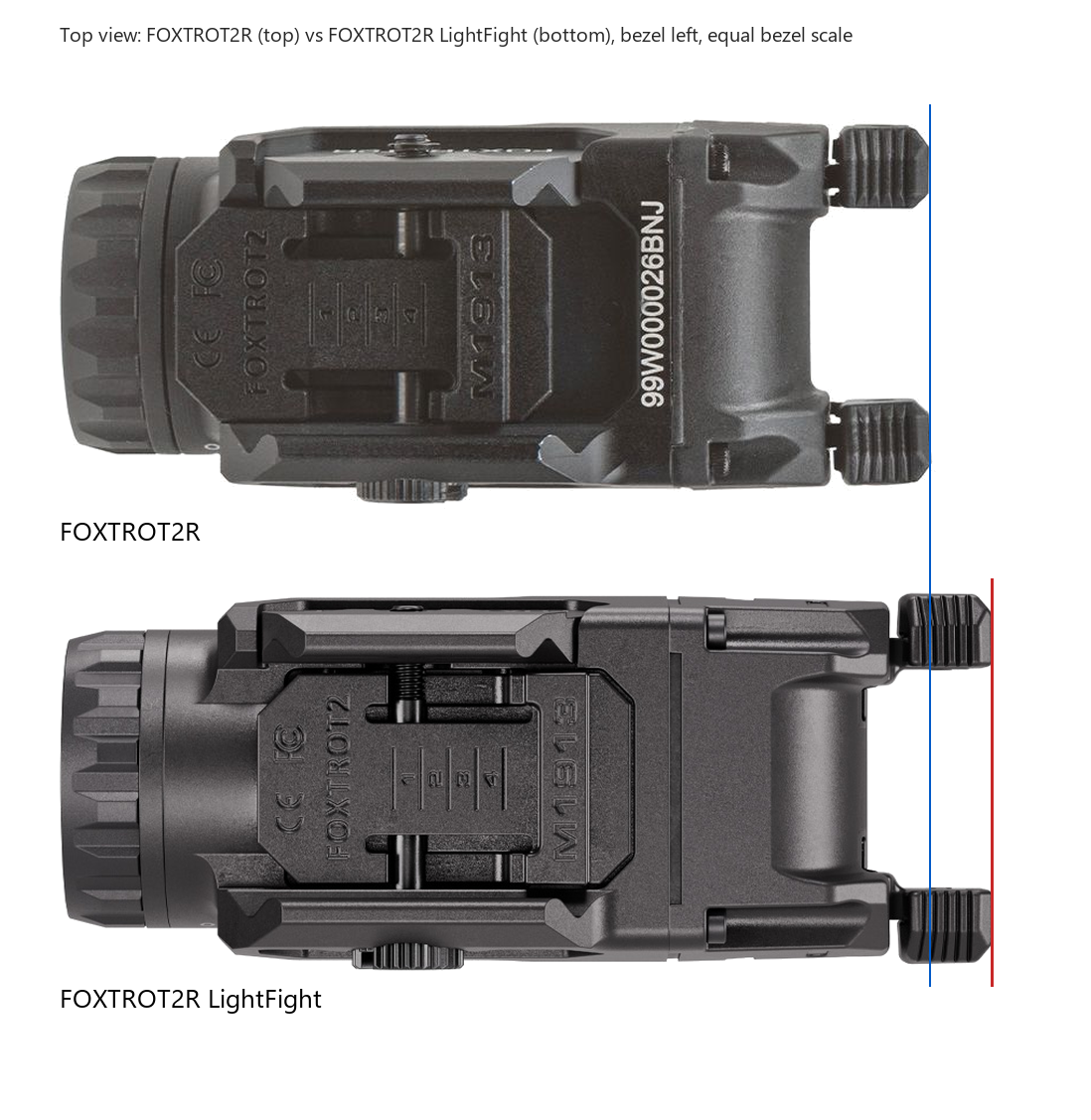
Here’s why that matters. A light-bearing holster retains on the light, and it’s molded so that the light seats fully at the same moment the trigger guard drops into its pocket. Those two things only line up if the distance from the front of the light to the trigger guard is what the holster was built for. On the LightFight, the longer rear housing has to go somewhere, and the only place is forward, so that distance necessarily grows. Put a LightFight in a FOXTROT2R holster and the light will insert all the way, but the pistol stops about a fifth of an inch short of where it’s designed to sit. The trigger guard never reaches its pocket, the retention isn’t engaged the way it was molded, and the gun rides high. That’s not a holster you want to carry.
So the FOXTROT2R LightFight needs a holster fit specifically to it. Werkz already has holsters for the FOXTROT2R on the P365-XMACRO, P320, Glock 17 and others. Whether we add the LightFight depends on demand, because a new fit is a real project for us: we 3D scan the light on the pistol, pull the scan into CAD, model the holster around it, cut molds, export the trim paths, test, and repeat until it’s right. If you’re planning to carry a LightFight, tell us your pistol through our holster request form. That’s how we decide what to build next.
Your turn
I want to know whether this light interests you, or whether it’s a solution looking for a problem. A few questions to get you started:
- Does a light that brightens your dot solve something you’ve actually run into, or do you just set the dot bright and leave it?
- Would you pay $50 over the standard FOXTROT2R for the link, knowing it only works with the XRAY5?
- If you carry a FOXTROT2R now, would you switch, and on which pistol?
Drop your answers in the comments. If there’s enough interest, we can get samples in for lab testing, and a holster gets a serious look.
Sources: SIG Sauer FOXTROT2R LightFight product page, SIG operator’s manual, The Firearm Blog, Oct 8, 2026, The Firearm Blog on the XRAY5, Oct 15, 2026, and our 2023 review, Sig Sauer Takes on Streamlight: The FOXTROT2R.