
For the full video review, click here.
Introduction
Over the years, I’ve reviewed more Olights than I care to admit. For all of them, I’ve had the same critique – I don’t like the rear switches. The newest Olight, the PL X, addresses this critique but also adds some new ones.
How does it perform?
Let’s find out.
First Impressions
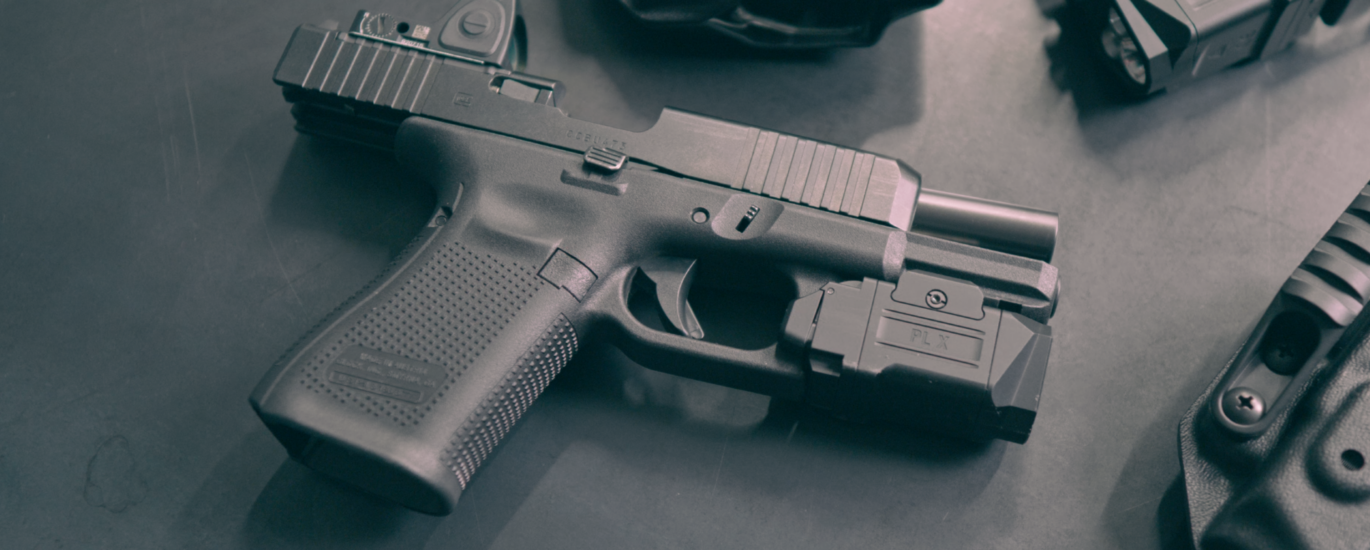
The Olight’s switches are similar to those on a TLR-7A, which are the gold standard.
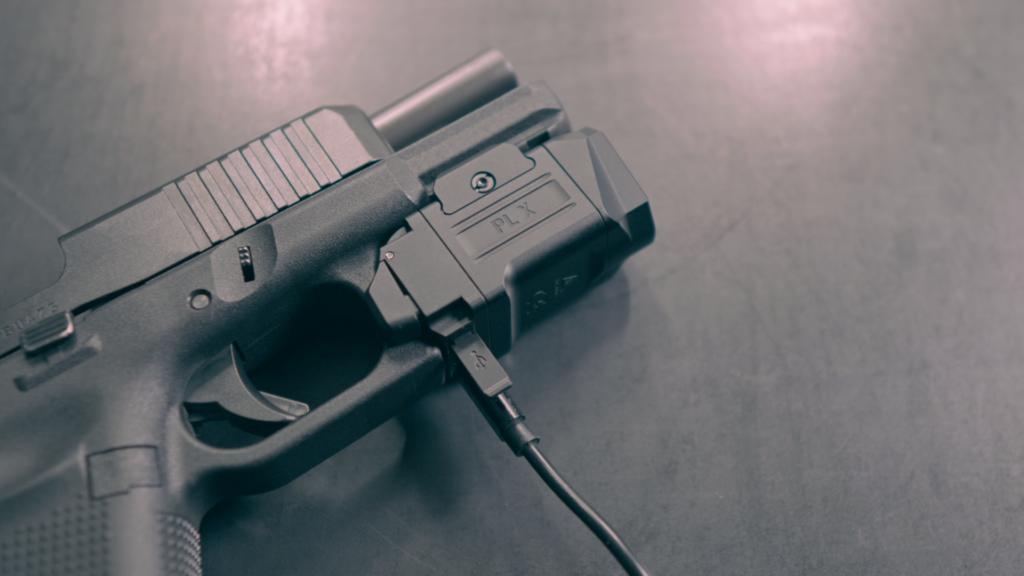
It uses USB-C charging through a door on the bottom of the light. In the past, Werkz holsters have supported Olight charging inside the holster, but since this USB-C can’t “break away” like previous magnetic designs, that will not be a feature on holsters for these lights. In my opinion, being able to swap a battery is much more convenient than USB-C charging on my nightstand, but I could see some people preferring rechargeability like this.
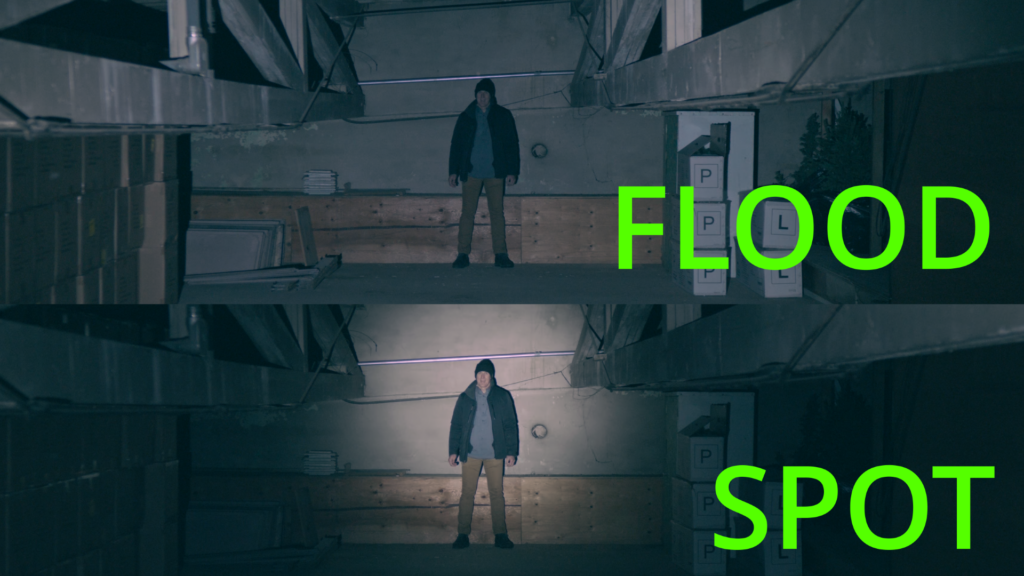
This light also has two distinct output modes, “floodlight” mode which should produce 1,200 lumens, and “spotlight” mode which should produce 850 lumens and 22,500 candela. The light has a total of three LEDs, two for flood, and one for spot. They are all housed within the same reflector.
You can toggle between these two modes with a switch on the side of the light, though to my knowledge, you can’t activate both flood and throw at the same time to combine the output.
Additionally, double-tapping the switches toggles a “low” mode which can be accessed in either “floodlight” or “spotlight” modes, giving this light a total of four modes. I’ll be testing flood and throw on high, but not on low, since I don’t find that feature useful.
Overall this light is pretty strange. If I were to run it on my pistol, I would just leave it in throw mode and never touch the switch.
During testing, though, I noticed that these lights seem to default to “low” mode, which could be an issue.
Let’s get into the specs.
Manufacturer’s Claims and Specs

| Spec (Modes) | Olight PL X Spotlight | Olight PL X Floodlight |
| Lumens | 900 | 1,200 |
| Candela | 22,500 | 3,310 |
| Runtime | 54 minutes | 49 minutes |
| CRI | 70 | 70 |
| Color Temp | 5700K | 6500K |
| Spec | Olight PL X |
| Length | 63mm |
| Width | 30mm |
| Ingress Protection | IPX7 |
| Price | $89.99 |
Olight has an interesting way of formatting their runtime claims. For the purposes of this article, we’ll consider the runtimes to be 58 minutes for spotlight and 52 for floodlight.
Into the Lab: Lumens, Candela, Runtime, Color Temp and CRI
Lumens
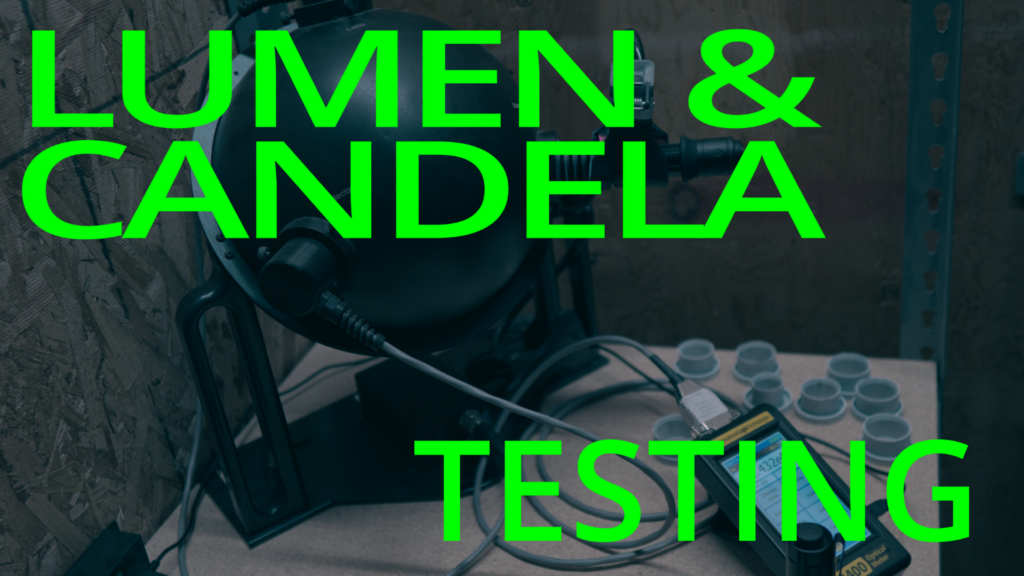
First, let’s compare the lumen output on the flood setting. We have three samples to test.
Let’s get a closer look at the first ten minutes:
Now, let’s look at the spot setting:
And the first ten minutes:
Overall, I’m pleasantly surprised. These lights are very consistent sample-to-sample, although sample three is the dog of the group.
| Olight PL X Flood | Max Lumens | Lumens (30s) | Runtime |
| Sample One | 1,165 | 1,156 | 47:24 |
| Sample Two | 1,133 | 1,123 | 47:34 |
| Sample Three | 1,135 | 1,127 | 43:11 |
| Average | 1,144 | 1,135 | 46:03 |
| Spec | 1,200 | 1,200 | 52:00 |
| Difference | -56 | -65 | -5:57 |
On the floodlight setting, the Olight doesn’t quite meet its output or runtime claims, but it’s pretty close.
| Olight PL X Spot | Max Lumens | Lumens (30s) | Runtime |
| Sample One | 974 | 959 | 53:13 |
| Sample Two | 973 | 958 | 53:33 |
| Sample Three | 982 | 966 | 48:30 |
| Average | 976 | 961 | 51:45 |
| Spec | 850 | 850 | 58:00 |
| Difference | +126 | +111 | -6:15 |
On the spotlight setting, the Olight exceeds its lumen claim pretty significantly, but it does fall short of the 58:00 runtime.
Candela
Olight claims 22,500 candela for the spotlight mode. I couldn’t find a claim for the floodlight, but I’ll test it anyways.
| Candela | Olight PL X Floodlight (0s) | Olight PL X Floodlight (30s) |
| Sample One | 3,648 | 3,652 |
| Sample Two | 3,624 | 3,583 |
| Sample Three | 3,589 | 3,604 |
| Average | 3,620 | 3,613 |
This amount of candela in flood mode isn’t spectacular, but it’s about on-par with a standard TLR-7A.
| Candela | Olight PL X Spotlight (0s) | Olight PL X Spotlight (30s) |
| Sample One | 24,080 | 23,610 |
| Sample Two | 22,600 | 22,630 |
| Sample Three | 23,730 | 23,150 |
| Average | 23,470 | 23,130 |
| Spec | 22,500 | 22,500 |
| Difference | +970 | +630 |
The spotlight mode, on the other hand, is actually pretty impressive for a light this size, and our samples are producing even more candela than specified. Again, this drives home that if you are seriously considering this light, you’ll probably only use the spotlight mode.
Color Temp and CRI
Olight is one of the few manufacturers that specify their Color Temp/CRI. I’d like to see other, particularly American, brands start doing this as well.
| Color Temp | Olight PL X Floodlight | Olight PL X Spotlight |
| Sample One | 6708K | 5341K |
| Sample Two | 6583K | 5342K |
| Sample Three | 6680K | 5271K |
| Average | 6657K | 5,318K |
| Spec | 6500K | 5700k |
| Difference | +157 | -382 |
The floodlight came in a little cooler than spec, and the spotlight came in a little warmer than spec. As for the spotlight, 5318K is a nice, neutral white.
| CRI | Olight PL X Floodlight | Olight PL X Spotlight |
| Sample One | 70.2 | 69.3 |
| Sample Two | 69.1 | 69.1 |
| Sample Three | 70.3 | 68.7 |
| Average | 69.9 | 69 |
| Spec | 70 | 70 |
CRI is basically right on spec. It’s not spectacular, but Olight made an accurate claim.
Final Thoughts
This is the best Olight yet. The switches and output and very strong. For me, though, the switch on the side is a liability, and I don’t like the idea of USB-C charging on a pistol light. For someone with different preferences, though, this light is a solid option, at an accessible price.
Here’s a quick table of the pros and cons, as I see them.
| Pro | Con |
| Strong lumen output (flood mode) Strong candela output (spot mode) Appears well-built Very good rear switches | Risk of accidentally toggling the side-switch High and low modes USB-C Charging Made in China |